Why the Old Internet Feels So Nostalgic Now
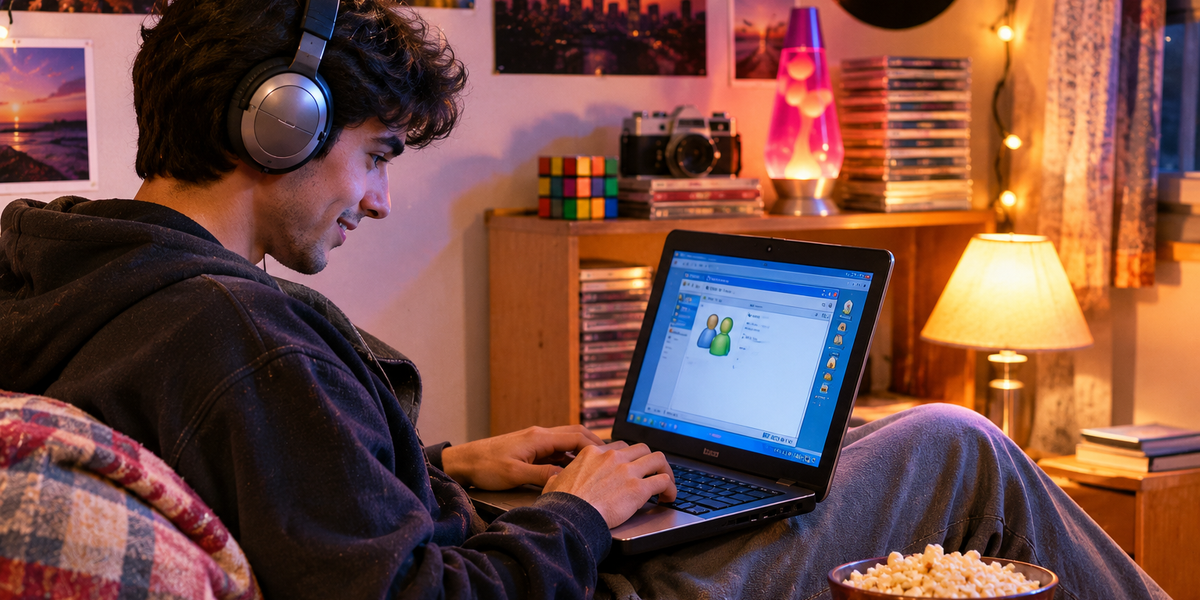
There is a particular kind of nostalgia attached to the old internet that is difficult to explain to someone who only knows the internet as it exists today. It is the memory of waiting for a computer to connect, choosing a strangely specific username, spending an unreasonable amount of time customizing a profile, downloading a song and hoping it was actually the song you wanted, or staying up late talking to people on MSN while pretending you were definitely about to go to sleep.
The technology was objectively worse in many ways. Connections were slower, websites broke constantly, search was less sophisticated, video quality was terrible, storage was limited, and using the internet often required more patience than anyone would tolerate today. Yet people who grew up with that version of the web frequently describe it with extraordinary affection.
Part of that feeling is ordinary nostalgia. We tend to romanticize the environments associated with earlier stages of our lives. But something else has changed too. The internet itself became more centralized, commercial, optimized, professional, algorithmic, and permanent. The old internet wasn’t necessarily better, but it often felt smaller, stranger, more personal, and more separate from ordinary life.
Perhaps that is what people miss most. The internet used to feel like somewhere you went. Now it feels like somewhere you never really leave.
The Internet Used to Have an Entrance
For many people, going online once involved a deliberate sequence of actions. You sat at a computer, connected to the internet, opened a browser, and entered a digital world that felt distinct from whatever was happening around you physically. When you finished, you logged off and walked away.
That boundary mattered more than we realized. The internet occupied part of the day rather than following you through every moment of it. There was no automatic assumption that you would receive messages while walking to school, eating dinner, sitting on a train, watching television, shopping, traveling, or lying in bed.
Smartphones gradually removed that entrance and exit. The internet became integrated into ordinary life. Maps, payments, work, dating, entertainment, photographs, shopping, communication, banking, transportation, news, and social relationships all moved onto the same connected device.
The internet became dramatically more useful. At the same time, it became harder to escape.
Waiting Was Part of the Experience
Old internet memories contain an extraordinary amount of waiting. Websites loaded slowly. Photographs appeared line by line. Videos buffered. Downloads took hours. Software updates felt like major events. Sending large files required strategy, optimism, and occasionally prayer.
Today, almost every technology company tries to eliminate waiting. That is obviously an improvement. Nobody genuinely needs the emotional experience of watching a download remain at 98 percent for twenty minutes.
But waiting created anticipation. If downloading a song took fifteen minutes, you cared about the song. If a new episode took forever to obtain, watching it felt like an event. If someone disconnected from MSN, you couldn’t instantly move the conversation to three other apps.
Scarcity made digital experiences feel more deliberate. We had access to much less, which sometimes meant paying more attention to what we had.
Now the problem is almost the opposite. Everything is available immediately, so very little feels scarce enough to demand our full attention.
Websites Used to Feel Like Places
One of the biggest differences between the old internet and today’s internet is how websites felt.
Early personal websites could be chaotic. There were strange backgrounds, blinking text, animated GIFs, visitor counters, questionable fonts, tiny icons, enormous banners, music that started automatically, and navigation systems apparently designed by someone actively trying to hide the information from you.
From a modern design perspective, many of these websites were terrible.
They also had personality.
A website often felt like entering someone’s digital room. The owner chose the colors, layout, images, links, music, and strange little details. Two websites about the same subject could look completely different because there wasn’t yet one universally accepted way for the internet to look.
Today, enormous portions of the web have converged around similar design patterns. Clean typography, white space, navigation bars, cards, subscription pop-ups, cookie notices, calls to action, optimized mobile layouts, and familiar templates make websites easier to use.
They also make many websites feel strangely interchangeable.
People Built Things Because They Wanted Them to Exist
The early web contained enormous numbers of websites created for reasons that had almost nothing to do with money.
Someone loved a television show, so they built a fan site. Someone collected information about trains, so they created a page containing everything they knew about trains. Someone wanted to publish poetry, catalog video-game secrets, document local history, share recipes, or write about a niche hobby.
There wasn’t always a business model.
There wasn’t necessarily an audience strategy.
Nobody was asking whether the topic had sufficient search volume.
The person simply cared enough to make something.
That amateur spirit still exists online, but it now competes with an internet heavily shaped by monetization. Search results contain commercial websites. Social platforms contain professional creators. Newsletters have growth strategies. Blogs have affiliate links. Videos have sponsorships. Posts are optimized for engagement.
The old web often felt like a collection of things people made. The modern web increasingly feels like a collection of things people are trying to grow.
Your Profile Was a Creative Project
Early social platforms gave people surprisingly large amounts of control over how their digital spaces looked.
People chose backgrounds, songs, profile layouts, fonts, colors, quotes, usernames, icons, and other details that were sometimes aesthetically questionable but deeply personal. Your page could be embarrassing, chaotic, dramatic, glittery, dark, minimal, or completely unreadable.
That was part of the fun.
Modern social profiles are much more standardized. Everyone’s Instagram profile follows roughly the same structure. Everyone’s TikTok profile follows the same interface. The platform controls the environment while users provide the content.
That standardization makes platforms easier to use, particularly at enormous scale. But it also removes some of the playful creativity of building your own little corner of the internet.
We went from decorating digital rooms to renting identical apartments inside enormous platforms.
Usernames Let Us Be Someone Else
The old internet was also more comfortable with pseudonyms.
You didn’t always enter a forum or chat room using your legal name, professional photograph, job title, location, and employer. You invented a username. Perhaps a terrible one. Often an extremely terrible one.
That created a different relationship with identity.
You could participate in a community around an interest without connecting every thought to a permanent public profile. A person could be known for their contributions to a forum without anyone knowing what they looked like.
Modern social media increasingly tied online identity to offline identity. Profiles became connected to real names, careers, schools, photographs, professional networks, and personal brands.
That made the internet more accountable in some ways. It also made participation feel higher stakes.
When every opinion becomes attached to your permanent searchable identity, casual experimentation becomes harder.
Forums Felt Like Communities
Before algorithmic feeds dominated online life, forums were one of the internet’s most important social spaces.
A forum might exist for photography, parenting, cars, football, books, gaming, technology, travel, health, fashion, or an incredibly specific hobby that only a few thousand people cared about.
People returned to the same communities repeatedly. They recognized usernames. They developed reputations. Arguments lasted for years. Running jokes developed. Experienced members helped newcomers. Moderators became familiar personalities.
Forums weren’t perfect. They could be hostile, cliquey, badly moderated, and full of misinformation.
But they had continuity.
You didn’t necessarily encounter a completely different group of strangers every time you opened the site. You were returning somewhere.
Modern feeds are often organized around content rather than community. You see a video, interact with it, and move on. You may never encounter that person again.
The content is continuous. The relationships often aren’t.
The Internet Used to Reward Exploration
Finding interesting things online once required more wandering.
You followed links from one website to another. You discovered someone’s blog through a forum signature. That blog linked to another website. Someone maintained a page containing their favorite links. You bookmarked strange corners of the web because you weren’t confident you would ever find them again.
Search engines eventually improved discovery dramatically, and social algorithms improved it further. Today, platforms can predict what you might enjoy before you even know what you’re looking for.
That convenience comes with a subtle trade-off.
Discovery becomes increasingly automated.
Instead of wandering through the internet, the internet comes to you.
The algorithm chooses the next video, next song, next post, next product, and next person.
It’s extraordinarily efficient.
But getting lost used to be part of the experience.
Search Used to Feel Like Searching
Modern search is designed to minimize the amount of effort between a question and an answer. That’s incredibly useful. But older web searches often required opening multiple websites, reading forums, following references, and gradually figuring things out.
The process was less efficient, but sometimes more exploratory.
You might search for one thing and discover five unrelated things along the way. You might find an old personal blog containing exactly the answer you needed. You might spend an hour reading a forum thread from six years earlier because someone had experienced the same obscure problem.
The internet felt enormous partly because navigating it required effort.
Today, recommendation systems and increasingly AI-generated answers can compress that journey into seconds.
We gain convenience.
But we may lose some of the accidental discovery that made the web feel mysterious.
There Was Less Content, So Things Stayed With Us Longer
The old internet wasn’t actually small, but compared with today’s constant stream of content, it could feel that way.
You visited the same websites.
Played the same games.
Watched the same viral videos.
Listened to the same downloaded songs.
Talked to the same people.
A funny video could circulate for months rather than disappearing from cultural memory within forty-eight hours.
Today, the amount of content available is effectively infinite. You can scroll faster than you could ever consume. Every minute brings new videos, posts, photographs, articles, podcasts, songs, products, opinions, and jokes.
When everything is constantly replaced, individual pieces of culture have less time to settle into memory.
Perhaps that’s why older internet moments sometimes feel unusually vivid. We didn’t necessarily experience better content.
We experienced the same content for longer.
Being Online Was More Anonymous and Less Performative
The modern internet constantly gives us numbers.
Followers.
Likes.
Views.
Shares.
Comments.
Subscribers.
Engagement rates.
Watch time.
Reach.
Even ordinary users can measure how much attention something received.
Once numbers become visible, they influence behavior.
You notice which photograph performs better. Which joke receives more reactions. Which topic gets ignored. Even if you’re not consciously trying to become a creator, you can begin adjusting what you share based on feedback.
Many older online spaces had status systems too, but personal communication often felt less quantified.
You could post because you wanted to post.
Not everything needed to perform.
The modern internet didn’t invent social comparison. Humans managed that perfectly well before computers.
It simply gave comparison a dashboard.
Social Media Used to Be About People You Knew
Early social networking largely revolved around existing relationships.
You added friends.
You looked at their photographs.
You commented on their updates.
You checked who was dating whom.
You noticed when someone’s relationship status mysteriously disappeared.
The content was often boring to everyone except the people involved.
That was exactly why it was social.
Modern social platforms increasingly prioritize content that can interest strangers. The funniest video, most dramatic story, strongest opinion, most beautiful image, or most useful explanation can travel far beyond someone’s personal network.
This created an extraordinary global creator economy.
But it also changed the fundamental purpose of the feed.
Social media stopped being primarily about what your friends were doing.
It became about what the entire internet could show you next.
We Didn’t Know We Were Creating a Permanent Archive
There was also an innocence to early internet use.
People posted strange things because they didn’t fully understand how permanent or searchable digital information could become.
They wrote embarrassing statuses.
Uploaded terrible photographs.
Shared dramatic song lyrics.
Created usernames that should never be mentioned again.
It was chaotic because people were still learning what online identity meant.
Today, we understand screenshots.
We understand digital footprints.
We understand that employers can search names.
We understand that an old post can suddenly reappear years later.
That awareness makes us more careful.
Probably for good reason.
But careful people create different internet culture from people who believe they’re simply talking to their friends.
The Internet Wasn’t Yet Your Workplace
Another reason old internet memories feel lighter is that the internet wasn’t as completely connected to work.
Today, the same laptop might contain your personal messages, work email, Slack, calendar, banking, social media, news, entertainment, and family photographs.
Your phone can deliver a work message while you’re having dinner.
The internet no longer clearly represents leisure.
For many people, it is also the office.
That changes the emotional relationship we have with technology.
Opening a computer once meant playing a game, talking to friends, browsing websites, or listening to music.
Now it may immediately remind you of twelve unanswered emails.
The device stayed the same.
The emotional meaning changed.
Smartphones Removed Boredom
Waiting for a bus used to involve waiting for a bus.
Standing in a queue involved standing in a queue.
Sitting alone in a café involved looking around.
Going to bed involved eventually having nothing left to do.
Smartphones filled those spaces.
Whenever boredom appears, the internet is available immediately.
That’s incredibly convenient.
It may also be one reason the old internet feels more special.
If you could only access it at certain times, being online was an activity.
Now it fills the spaces between activities.
Something that is available constantly can stop feeling like a destination.
MSN Had Something Modern Messaging Doesn’t
Old messaging platforms had their own rituals.
You logged in.
People saw you appear online.
You changed your status.
You chose a display name.
You set yourself to “Away” while remaining extremely present.
You logged out dramatically.
There was a sense that people were entering and leaving a shared digital space.
Modern messaging is more convenient because we’re effectively always reachable.
But permanent availability removes some of the eventfulness.
Nobody really “comes online” anymore.
They’re simply somewhere on the internet.
The green dot is always waiting.
Digital Scarcity Made Things Feel Valuable
You once had limited storage.
Limited bandwidth.
Limited photographs.
Limited music.
Limited access.
Limited time online.
Restrictions are annoying, but they also create decisions.
Which songs deserve space on your MP3 player?
Which photographs should you keep?
Which websites should you bookmark?
Which people are you going to spend tonight talking to?
Modern technology solved many of those constraints.
We can store thousands of photographs, stream almost any song, communicate with almost anyone, and access enormous libraries of information instantly.
But abundance creates a different problem.
When you can have everything, choosing what deserves your attention becomes much harder.
We Owned More of Our Digital Lives
The old internet often involved files.
You downloaded music.
Stored photographs on your computer.
Saved documents locally.
Built websites.
Maintained folders.
Burned CDs.
Copied things to USB drives.
Modern digital life increasingly happens through services.
Your music lives in a streaming platform.
Photographs may live in the cloud.
Your social history lives inside a platform.
Movies live inside subscription services.
Your conversations live inside messaging apps.
This is dramatically more convenient, but it can also feel less tangible.
A folder of MP3 files felt like your music collection.
A streaming library containing eighty million songs feels more like access.
We traded ownership for availability.
For most purposes, that was a fantastic trade.
Emotionally, however, the two don’t feel exactly the same.
Old Technology Had More Rituals
Physical and early digital technology required rituals that modern interfaces deliberately eliminated.
Choosing a CD.
Burning a playlist.
Organizing MP3 files.
Setting an MSN status.
Updating a blog.
Connecting a digital camera to a computer.
Uploading photographs manually.
Waiting for a download.
These processes were inefficient.
But rituals create memories.
When technology becomes frictionless, we notice the experience less.
The better modern technology works, the more invisible it becomes.
Nobody feels nostalgic about a background cloud synchronization completing successfully.
You barely know it happened.
We Remember the People, Not the Technology
This is probably the most important part of old-internet nostalgia.
When someone says they miss MSN, they may not actually miss MSN.
They miss who they talked to there.
When they say they miss old Facebook, they may miss being nineteen.
When they miss early YouTube, they may miss watching ridiculous videos with siblings after school.
When they miss an old online game, they may miss the friends who played it with them.
Technology becomes attached to periods of life.
A login sound can contain an entire adolescence.
An old website design can remind you of a bedroom you haven’t lived in for twenty years.
A particular ringtone can suddenly make you remember exactly what it felt like to be fourteen.
We’re rarely nostalgic for bandwidth.
We’re nostalgic for who we were when that bandwidth was terrible.
Nostalgia Edits Out the Annoying Parts
Of course, memory cheats.
We remember the excitement of early internet culture more easily than we remember broken websites, malware, spam, painfully slow downloads, terrible search results, pop-up advertisements, lost files, unreliable connections, and accidentally destroying the family computer with something downloaded from a suspicious website.
The old internet wasn’t a paradise.
It could be frustrating, unsafe, inaccessible, exclusionary, and technically terrible.
Modern technology solved enormous numbers of genuine problems.
The nostalgia doesn’t mean we should bring all of it back.
It means some qualities disappeared alongside the problems.
We wanted faster connections.
We got them.
We didn’t necessarily realize that speed would change how we experience information.
The Internet Became More Useful and Less Weird
Today’s internet is astonishingly capable.
You can video call someone on another continent, translate languages instantly, navigate an unfamiliar city, access university lectures, order groceries, work remotely, manage money, stream almost any song, and find answers to obscure questions within seconds.
The old internet couldn’t compete with that.
But optimization has consequences.
Platforms discovered what works.
Design became standardized.
Algorithms learned what keeps people engaged.
Businesses learned how to monetize attention.
Websites became professional.
The internet became smoother.
And perhaps a little less weird.
The old web often felt like exploring a city built by millions of people with no planning department.
The modern internet can sometimes feel like exploring an extremely efficient shopping center.
Everything works.
Everything is optimized.
And somehow you miss the strange little shop that made absolutely no economic sense.
AI May Make the Old Internet Feel Even More Distant
Generative AI introduces another major change.
The internet was once largely built from things humans deliberately created and uploaded. Increasingly, text, images, music, video, websites, advertisements, and other digital material can be generated automatically at enormous scale.
That doesn’t mean human creativity disappears.
But it changes the economics of content.
When producing another article, image, advertisement, or video becomes extremely cheap, the internet can contain even more material than it already does.
In that environment, the old internet’s handmade quality may become increasingly nostalgic.
A badly designed personal website created by one obsessed person may feel strangely precious precisely because you know someone cared enough to build it.
Imperfection becomes evidence of effort.
Maybe We Miss the Smaller Internet
The internet once felt enormous because we didn’t know what was out there.
Paradoxically, it now feels smaller because the same handful of platforms mediate so much of what we see.
Billions of people are online.
There are more websites, videos, creators, communities, and pieces of information than ever.
Yet many of us spend most of our online lives moving between the same few applications.
The old internet was smaller in population but often felt more geographically expansive.
There were places to discover.
Now the internet often feels like one endless feed.
Some of What We Miss Can Come Back
We can’t recreate the early internet exactly, nor would we necessarily want to.
But some of the qualities people miss are still possible.
You can maintain a personal website.
Write something without optimizing it.
Join a small online community.
Subscribe directly to writers you enjoy.
Keep your own photographs and files.
Turn off recommendation feeds occasionally.
Send someone a long email.
Create something online even if only fifty people will ever see it.
Use the internet deliberately instead of allowing it to fill every empty moment.
The technology changed.
But not every part of internet culture has to be dictated by the largest platforms.
The Real Reason the Old Internet Feels So Nostalgic
We don’t miss slow connections.
We don’t miss broken websites.
We don’t miss viruses, terrible video quality, or waiting an hour for a song to download.
We miss what surrounded those things.
The sense of discovery.
The separation between online and offline life.
The strange personal websites.
The smaller communities.
The anonymity.
The creativity.
The feeling that not everything was trying to sell us something.
Most of all, we miss the people and periods of our lives attached to those technologies.
The old internet arrived while many of us were still discovering what the internet could be.
Now we know exactly what it became.
The Simple Version
The old internet feels nostalgic not because the technology was better, but because the experience was different. It was slower, smaller, less polished, less commercial, and more fragmented. You often had to search for interesting things rather than having them selected automatically. You visited websites instead of endlessly scrolling feeds. You logged on and, importantly, you logged off.
Today, the internet is faster, safer in many ways, more accessible, and incomparably more useful. But it is also more optimized, more commercial, more centralized, and more difficult to escape. It became infrastructure for almost everything we do.
Maybe that’s why an old computer sound, a forgotten website, or a screenshot of MSN can produce such an unexpectedly emotional reaction.
We aren’t really remembering a better internet.
We’re remembering a time when the internet still felt like a place we could visit, explore for a while, and then leave behind when we turned off the computer.