The Quiet Loneliness of the Always-Online Generation

We Have Never Been This Connected, Yet Connection Can Feel Strangely Thin
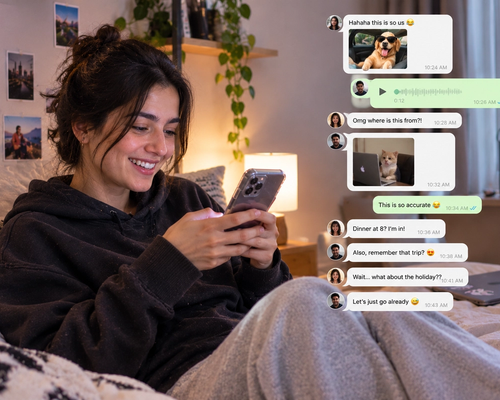
For the first time in history, many of us can reach almost everyone we know within seconds. We wake up to messages, spend the day inside group chats, watch friends’ lives through Stories, send memes instead of letters, hear voice notes from another country, and know what someone we haven’t seen in ten years ate for dinner. There is almost always somebody available somewhere on the screen. And yet, being constantly connected doesn’t necessarily protect us from feeling lonely. In some ways, it can make loneliness harder to recognize because it rarely looks like complete isolation anymore. You can receive twenty notifications and still feel that nobody has really asked how you are. You can know what hundreds of people are doing while feeling that very few people know what is happening inside your own life. Digital communication is real communication, and online relationships can be deeply meaningful, but the quantity of contact can disguise the quality of connection. A reaction to a Story tells someone you noticed them; it doesn’t necessarily create a conversation. A group chat can make us laugh all day while leaving important things unsaid. We can remain permanently updated on one another without actually spending much time together. The strange loneliness of the always-online generation isn’t necessarily the absence of people. Sometimes it is the feeling of being surrounded by people’s presence without experiencing enough of their attention.
Social Media Lets Us Witness Everyone Else’s Lives Without Actually Entering Them
Before social media, keeping up with someone usually required some kind of deliberate contact. You called them, met them, wrote to them, or heard about them through somebody else. Now we can quietly observe one another for years. We know who got married, who had a baby, who moved abroad, who changed jobs, who went to Greece, who bought an apartment, and who seems to have developed an obsession with running at six in the morning. This creates a strange illusion of closeness. Because we’ve seen someone’s life continuously, we can feel as though we’ve remained connected even when we haven’t spoken properly in months. The reverse happens too: because our friends have seen our photos and updates, we may assume they already know how we’re doing. Important conversations get replaced by passive awareness. At the same time, watching so many other lives creates another kind of emotional distance. We see birthdays we weren’t invited to, dinners happening without us, friendships that appear closer than ours, careers moving faster, families looking happier, and people apparently having more interesting weekends. We compare the complicated reality of our own lives with selected fragments of everyone else’s. Even when we intellectually understand that social media is curated, emotionally the comparison can still land. The result is a peculiar form of loneliness in which we aren’t disconnected from society at all. We may actually be seeing too much of it, constantly reminded of all the places we aren’t, all the people we’re not with, and all the lives we’re not living.
Constant Communication Can Leave Less Space for Real Presence
The always-online life also changes what happens when we are physically together. A friend is telling a story and a notification appears. Someone checks a message during dinner. A conversation pauses because another conversation is happening on a screen. None of these moments seems particularly serious, and individually they usually aren’t. But repeated hundreds of times, they fragment attention. We become accustomed to being partially present in several places instead of fully present in one. The same technology that keeps distant relationships alive can quietly interrupt the relationships sitting directly in front of us. It also removes many of the small moments in which human connection once appeared naturally. Waiting for a train, sitting alone in a café, walking somewhere, or standing in a queue used to contain boredom, observation, accidental conversation, or simply time alone with our thoughts. Now the phone can fill every empty second. We rarely need to risk looking around, talking to a stranger, or even noticing that we feel lonely because entertainment arrives before the feeling fully forms. This doesn’t mean phones have destroyed human connection; they have preserved countless friendships, families, and communities across distance. The problem is subtler. A tool designed to connect us can become so effective at filling silence that it also prevents us from noticing which kinds of connection are missing. There is a difference between having something to look at and having someone who sees you, between receiving attention and feeling understood, and between being reachable every minute of the day and having people you can genuinely reach when something matters.
Maybe the Answer Isn’t Less Internet, but More Intentional Connection
It is tempting to respond to all of this with a dramatic prescription: delete social media, throw away the phone, move somewhere without Wi-Fi, and rediscover real life. That misses the point. The internet is part of real life now, and many of its relationships are real too. A voice note from a friend living thousands of kilometers away can provide more comfort than a room full of acquaintances. A group chat can hold a family together across countries. Online communities can give people belonging they struggle to find locally. The issue isn’t whether connection happens through a screen; it is whether the connection contains attention, vulnerability, reciprocity, and time. Perhaps the more useful response to always-online loneliness is to become more deliberate about moving from awareness to relationship. Call the friend whose Stories you watch every day. Ask the second question after “How are you?” Sit through a meal without repeatedly leaving the table through your phone. Tell someone something before turning it into a post. Allow some experiences to exist without immediately converting them into content. Let yourself occasionally be bored enough to notice what you’re feeling. The irony of our generation may be that we solved the technical problem of reaching one another almost perfectly while discovering that human closeness was never primarily a technical problem. We don’t only need access to other people. We need their attention, their time, their curiosity, their physical presence when possible, and the feeling that our lives are being witnessed by someone who isn’t simply scrolling past them. Being online can keep us connected to almost everyone. Feeling less alone still depends on something older and much harder: being genuinely known by a few.