How Group Chats Replaced Social Media

The funniest thing you saw online today might never appear on your public profile.
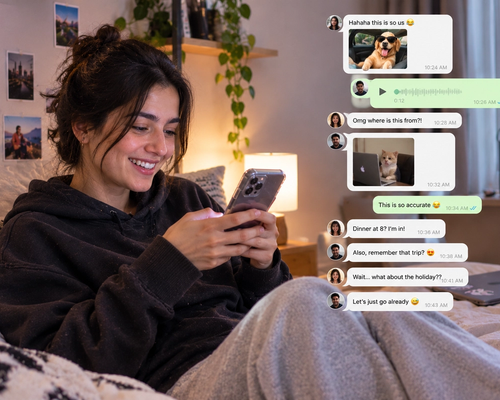
You find a ridiculous video, send it to the group chat, and immediately close the app. Someone replies with a voice note. Another person sends a screenshot from somewhere else. The conversation turns into gossip, then dinner plans, then a photograph from five years ago, then a completely unrelated argument about where to go on holiday.
Meanwhile, your actual social media profile remains untouched.
No post.
No caption.
No public conversation.
For years, social media was built around the idea that we would increasingly live our social lives in public. We would post photographs, share thoughts, update statuses, comment on friends’ lives, and build digital versions of ourselves for everyone we knew to see.
Instead, something interesting happened.
A huge amount of the genuinely social part of the internet moved somewhere much less visible.
Into the group chat.
WhatsApp groups. Instagram DMs. Messenger threads. iMessage conversations. Telegram groups. Discord servers. Slack channels between friends that definitely aren’t being used for work.
The public feed didn’t disappear.
But for many people, it became somewhere to find things.
The group chat became where they actually talk about them.
Social Media Used to Feel More Social
Think about the early promise of social media.
You added people you actually knew.
Someone posted photographs from a birthday.
Friends commented underneath.
Someone wrote a status about their day.
Another person posted a terrible song lyric that was obviously directed at someone specific.
People wrote on each other’s profiles.
Conversations happened publicly because public posting was the main feature.
The feed felt like a digital version of your social circle.
Over time, that changed.
Feeds became bigger.
Platforms became more commercial.
Algorithms became more influential.
Creators became professional.
Brands arrived.
Advertisements multiplied.
Recommended content appeared from people you had never followed.
Social media gradually became less like a room full of your friends and more like an enormous entertainment venue.
Your friends are still somewhere inside.
But they’re competing with the entire internet.
The Feed Became Entertainment
Open a major social platform today and much of what you see may come from people you don’t personally know.
A comedian.
A celebrity.
A news account.
A beauty creator.
A chef.
A stranger reviewing a hotel.
A person organizing their refrigerator with disturbing precision.
An advertisement.
A video selected because an algorithm thinks you’ll watch it.
Then another.
Then another.
This content can be excellent.
But the experience is increasingly closer to personalized television than traditional social networking.
You aren’t necessarily opening the app to find out what your friend from university did this weekend.
You’re opening it because the recommendation system is extremely good at finding things that will hold your attention.
Social media became media.
The social part moved into messages.
We Still Share Constantly—Just Not Publicly
This is what makes the shift easy to miss.
People haven’t stopped sharing online.
They may actually share more than ever.
They’re simply sharing differently.
Instead of reposting a video publicly, you send it to three friends.
Instead of uploading twenty holiday photographs, you send forty-five into the family group.
Instead of writing a public opinion about something, you send a voice note.
Instead of commenting underneath a stranger’s viral post, you screenshot it and discuss it privately.
The sharing didn’t disappear.
It moved from broadcasting to conversation.
That’s a fundamentally different social behavior.
Public Posting Is a Performance
Every public post has an invisible audience.
Your friends.
Your colleagues.
Your family.
People you went to school with fifteen years ago.
Former coworkers.
Someone you met once at a wedding.
Perhaps clients.
Perhaps your boss.
Perhaps your ex.
Perhaps your ex’s cousin for reasons nobody understands.
When all those people occupy the same digital audience, posting becomes complicated.
A joke that’s perfect for your closest friends may make no sense to your colleagues.
A photograph you want your family to see might feel too personal for everyone else.
An opinion you would happily discuss over dinner may feel unnecessarily dramatic when presented to hundreds of people without context.
So you start editing yourself.
Is this worth posting?
Does this photograph look good enough?
Will people understand the joke?
Am I posting too much?
Will this seem like showing off?
The public feed creates an audience.
The group chat creates a room.
Group Chats Have Context
Context changes everything.
When you send something to your closest friends, you don’t need to explain fifteen years of history.
They already know.
They know who “that guy” is.
They know why the restaurant is funny.
They know what happened on the trip.
They know which family member you’re referring to.
They know whether you’re joking.
They know when “I’m fine” means you’re fine and when it absolutely does not.
Public social media lacks much of this shared context.
Every post has to work for a mixed audience.
Group chats can operate almost entirely through references, half-sentences, screenshots, and jokes that would be incomprehensible to anyone outside the group.
That makes them feel more intimate.
And more human.
The Group Chat Doesn’t Need Good Content
Public social media encourages polish.
The photograph should be good.
The caption should be interesting.
The story should be worth telling.
The video should hold attention.
The group chat has no such standards.
You can send a blurry photograph of your dinner.
A screenshot of the weather.
A two-second video of your dog.
A voice note where the first thirty seconds are just you trying to remember what you wanted to say.
A photograph of a shoe you might buy.
A message saying “?????”
None of this would make sense as public content.
But it makes perfect sense as conversation.
That’s why group chats often contain a much more accurate record of ordinary life than social media profiles do.
Public feeds contain highlights.
Group chats contain Tuesday.
Screenshots Became a Form of Conversation
One of the defining objects of modern digital culture is the screenshot.
Someone posts something publicly.
You don’t comment.
You screenshot it.
Then you send it somewhere private.
The real conversation begins there.
A screenshot might arrive in the group chat with no explanation whatsoever.
Everyone immediately understands why.
This creates an interesting two-layer internet.
The public internet produces material.
The private internet interprets it.
A celebrity interview happens publicly.
The group chat analyzes it.
Someone announces an engagement.
The group chat reacts.
A company publishes something strange.
The work chat discusses it.
A dating profile appears.
The group chat begins an investigation worthy of a government intelligence agency.
The feed provides the event.
The group chat provides the commentary.
Memes Are Made for Group Chats
Memes are particularly powerful inside private conversations because they’re rarely sent randomly.
You see a meme and immediately think:
“This is Elena.”
“This is Granit.”
“This is literally us at work.”
“This is exactly what happened yesterday.”
The meme becomes personalized through the act of sending it.
Publicly, it’s content.
Privately, it’s communication.
This is why “send” has become one of the most meaningful interactions on social platforms.
A post might receive fewer public comments than older social media content did while still being distributed through thousands of private conversations.
From the outside, that activity is largely invisible.
But socially, it may be more meaningful than a like.
Group Chats Let Us Choose the Audience
Human beings don’t normally communicate with everyone they know at once.
Offline life has always been divided into groups.
Family.
Closest friends.
Work friends.
School friends.
Neighbors.
Parents from school.
People from a hobby.
People from a trip.
People you inexplicably became friends with during one chaotic weekend eight years ago.
Group chats recreate that structure online.
You don’t need one identity for everyone.
The family group receives one version of you.
Your closest friends receive another.
Your professional group receives another.
This isn’t necessarily fake.
It’s normal social behavior.
You probably don’t speak to your grandmother exactly the way you speak to your best friend either.
Group chats allow digital communication to regain those social boundaries.
The Audience Is Small Enough to Be Real
Posting to 700 followers creates a strange psychological environment.
You know people are watching.
But you don’t know exactly who will see it.
You don’t know how they’ll interpret it.
You don’t know who will silently judge it.
That uncertainty can create self-consciousness.
In a group chat with six friends, the audience is clear.
You know exactly who is there.
That changes what you’re willing to say.
Communication becomes less about presentation and more about response.
You’re not publishing.
You’re talking.
That difference sounds small.
It’s enormous.
Voice Notes Made Private Communication Even More Intimate
Voice notes pushed group chats even further away from traditional social media.
Text removes tone.
Voice brings it back.
You can hear hesitation.
Sarcasm.
Excitement.
Exhaustion.
Laughter.
Someone walking down the street while talking.
Someone whispering because their child is asleep.
Someone beginning with “Okay, this is a long story” and sending seven minutes of audio.
Voice notes sit somewhere between texting and calling.
They’re asynchronous enough that the other person doesn’t need to answer immediately, but personal enough to feel like a real conversation.
They’re almost impossible to translate into traditional public social media.
That’s exactly why they work.
Group Chats Don’t Require an Algorithm
One of the most important differences between feeds and group chats is who decides what you see.
On an algorithmic feed, a recommendation system decides which pieces of content deserve your attention.
In a group chat, people decide.
Your friend sends you something because they think you’ll care.
Your sister sends a photograph because she wants you to see it.
Someone shares an article because it relates to yesterday’s conversation.
The selection process is human.
Your group chat is effectively a tiny recommendation algorithm made from people who actually know you.
And sometimes it’s much better.
A platform knows that you watched six cooking videos.
Your friend knows you hate coriander.
That’s a different level of personalization.
The Best Recommendation Engine Might Be Your Friends
Think about how many things you discover through private messages.
Restaurants.
Books.
Songs.
Hotels.
Clothes.
Jobs.
News stories.
Recipes.
Shows.
Products.
Videos.
You may technically discover the original content through a platform.
But the reason you pay attention is that someone you trust sent it.
This adds a layer of social filtering.
There is too much content online for anyone to evaluate everything independently.
Friends help filter it.
A message saying “you would love this” can be more persuasive than an advertisement shown twenty times.
That’s one reason private sharing is so culturally powerful.
Group Chats Are Also Where Plans Actually Happen
Public social media shows what happened.
Group chats often create what happens.
“Are we free Friday?”
“Where should we eat?”
“Who booked the hotel?”
“What time is the flight?”
“Can someone bring cake?”
“Send the address.”
“Where are you?”
“I’m outside.”
“No you’re not.”
“Wrong entrance.”
This is the unglamorous infrastructure of real relationships.
Group chats coordinate birthdays, holidays, dinners, weddings, work, childcare, travel, emergencies, and ordinary weekends.
They don’t merely document social life.
They organize it.
That makes them fundamentally different from feeds.
Family Group Chats Became Digital Living Rooms
Family communication used to happen through phone calls, visits, and occasional messages.
Now many families have continuous digital spaces.
Grandparents receive photographs.
Someone sends a recipe.
An aunt forwards something questionable.
A cousin announces news.
Someone asks who is coming Sunday.
Three people answer.
Eight people read the message and say nothing.
One person responds four days later to a completely different part of the conversation.
The group persists.
It becomes a kind of digital living room people enter and leave throughout the day.
No individual message is particularly important.
The continuity is.
Group Chats Create Their Own Cultures
Every long-running group chat eventually develops rules that nobody formally created.
Certain people always send voice notes.
Someone never answers.
Someone reacts to everything.
Someone provides news.
Someone sends memes at 2 a.m.
One person becomes the unofficial travel planner.
Another appears only when there’s gossip.
The group develops recurring jokes, vocabulary, nicknames, rituals, and references.
In other words, it becomes a miniature culture.
This is something public platforms struggle to reproduce because culture depends on continuity and shared history.
A viral comment section exists for a moment.
A group chat can exist for ten years.
They’re Messy Because Relationships Are Messy
Group chats aren’t perfect.
They can become exhausting.
Notifications multiply.
Important messages disappear beneath jokes.
People misunderstand tone.
Someone feels ignored.
Someone responds to the wrong message.
Two people begin a forty-message conversation that should obviously have moved to private chat.
Large groups can become chaotic enough that everyone eventually mutes them.
But the messiness is partly evidence of what makes them social.
Human relationships aren’t optimized feeds.
They’re repetitive, inconvenient, funny, boring, emotional, and occasionally confusing.
Group chats preserve that disorder.
Read Receipts Changed Social Pressure
Private messaging also created entirely new forms of social anxiety.
Seen.
Read.
Online.
Typing…
These tiny indicators carry enormous emotional weight.
You sent the message.
They read it.
They didn’t answer.
What does that mean?
Probably nothing.
Possibly everything.
Public social media creates anxiety around likes and visibility.
Private messaging creates anxiety around response.
The metrics changed, but the human tendency to interpret digital behavior certainly didn’t disappear.
We simply moved from “Why didn’t they like my post?” to “Why did they read my message six hours ago?”
Progress.
Sort of.
Private Doesn’t Always Mean Private
Group chats feel private because the audience is limited.
But that doesn’t mean everything inside them stays there.
Messages can be forwarded.
Screenshots can be taken.
Photos can be saved.
People can be added.
Accounts can be compromised.
Cloud backups can exist.
And depending on the platform, different security and encryption systems may apply.
The healthiest rule is still an old one:
Don’t send something digitally if its exposure would create catastrophic consequences.
The group chat may feel like a closed room.
But unlike a real room, conversations can be copied perfectly.
Public Posting Became More Professional
Another reason people moved toward private spaces is that public social media became increasingly professionalized.
The casual photograph now competes with influencers using professional cameras.
Ordinary videos compete with carefully edited productions.
Captions are optimized.
Thumbnails are designed.
Posting schedules exist.
Analytics exist.
Brand deals exist.
People build careers around content.
That’s impressive, but it changes the atmosphere.
When everyone else appears to be producing, an ordinary person may feel strangely self-conscious about simply posting.
The group chat has no content strategy.
Nobody checks engagement.
Nobody cares whether your photo fits the grid.
You send it because your friends will laugh.
Stories Were an Intermediate Step
The rise of temporary stories already hinted that people wanted lower-pressure sharing.
A permanent profile post felt important.
A story disappeared.
That made it easier to share something ordinary.
Lunch.
Weather.
A song.
A random thought.
A blurry photograph.
But even stories eventually developed their own audience awareness.
You still know people are watching.
You still see viewer lists.
You may still curate what you show.
Private messages reduce the audience even further.
The direction has been consistent.
From permanent public posts.
To temporary public posts.
To private sharing.
The internet didn’t become less social.
Social interaction became more selective.
We Became More Careful About Digital Permanence
People also understand the internet differently now.
A generation that grew up posting everything has watched old tweets resurface, photographs circulate beyond their intended audience, and teenage posts survive into adulthood.
We know that public content can travel.
We know employers can see things.
We know strangers can screenshot things.
We know context disappears.
That awareness naturally changes behavior.
Sending something to five trusted friends feels different from publishing it to hundreds of people attached to your real identity.
The internet taught us about permanence.
Then we started retreating into smaller rooms.
Social Media Became the Mall. Group Chats Became the House.
A useful way to think about modern social media is as a huge shopping mall.
You walk around.
You see strangers.
You discover things.
There are advertisements everywhere.
You browse.
You watch people.
You occasionally interact.
You might even buy something.
But you don’t necessarily have your deepest conversations in the middle of the mall.
For that, you go somewhere smaller.
The group chat is the house.
It’s where you bring back everything you found outside.
“Look at this.”
“Did you see this?”
“Should we buy this?”
“Is this true?”
“This reminded me of you.”
The public internet provides material.
The private internet turns it into social life.
The Internet Is Becoming More Private and More Public at the Same Time
This is the strange contradiction.
Public social media has never been larger.
Creators can reach millions of strangers.
Videos can cross the world overnight.
Personal brands are enormous.
People broadcast themselves at unprecedented scale.
At exactly the same time, ordinary social communication is becoming more private.
We consume publicly and discuss privately.
We discover through algorithms and react with friends.
We watch strangers and message people we know.
The internet is becoming both a giant broadcasting network and millions of tiny private rooms.
Those aren’t opposing trends.
They’re two halves of the same system.
This Changes What “Viral” Means
In older social media, popularity was visible.
You could see likes.
Shares.
Comments.
Retweets.
Today, a huge amount of distribution happens privately.
A video may spread through thousands of group chats.
An article may circulate through private messages.
A screenshot may move far beyond the original post.
That sharing is harder for outsiders to see.
Something can become culturally enormous without every interaction happening publicly.
The visible metrics show only part of the story.
The internet’s most important distribution network may increasingly be people pressing Send.
It Also Changes Influence
If your friend sends you a restaurant and says, “We need to go here,” that recommendation carries different weight from an advertisement.
If five people in your group chat independently start talking about the same product, it begins to feel culturally relevant.
Private conversations influence what people buy, watch, read, wear, and believe.
But because those conversations aren’t public, their influence is difficult to observe directly.
This is one reason word of mouth remains powerful even in an algorithmic world.
Algorithms can introduce you to something.
People you trust often determine whether you care.
Group Chats Feel More Human Because They’re Smaller
The internet’s biggest problem may simply be scale.
Human beings evolved to communicate in relatively small social groups.
We understand conversations.
We understand relationships.
We understand reputation among people we know.
A public feed containing millions of strangers is a completely different social environment.
Group chats restore some of the scale our brains understand naturally.
You know who is speaking.
You know their history.
You know the context.
You know whether they’re joking.
You know what happened yesterday.
The conversation accumulates meaning over time.
That’s difficult to reproduce in a feed optimized around whatever is newest.
The Group Chat Is the New Social Network
A social network doesn’t need a public profile, follower count, or algorithmic feed.
At its most basic level, a social network is simply a network of relationships.
And that’s exactly what group chats represent.
They’re smaller than traditional social platforms.
They’re fragmented.
They’re difficult to observe from outside.
But they’re where many relationships are actively maintained.
Birthdays are remembered there.
Trips are organized there.
Friendships survive distance there.
Families share everyday life there.
Work friendships develop there.
Jokes live there.
Arguments happen there.
People check whether everyone got home safely there.
That sounds considerably more social than scrolling through fifty videos from strangers.
The Simple Version
Group chats didn’t literally replace social media.
They replaced much of what social media originally promised to be.
Public platforms became places for discovery, entertainment, creators, brands, news, trends, and algorithmic recommendations.
Private chats became places for actual conversation.
We still find things publicly.
We just increasingly share what matters privately.
The feed tells you what’s happening on the internet.
The group chat tells you what your people think about it.
And maybe that’s why the most meaningful button on social media isn’t Like anymore.
It’s Send.