The Hidden Cost of Chasing Every New Gadget
The Upgrade Cycle Makes Perfectly Good Technology Feel Old
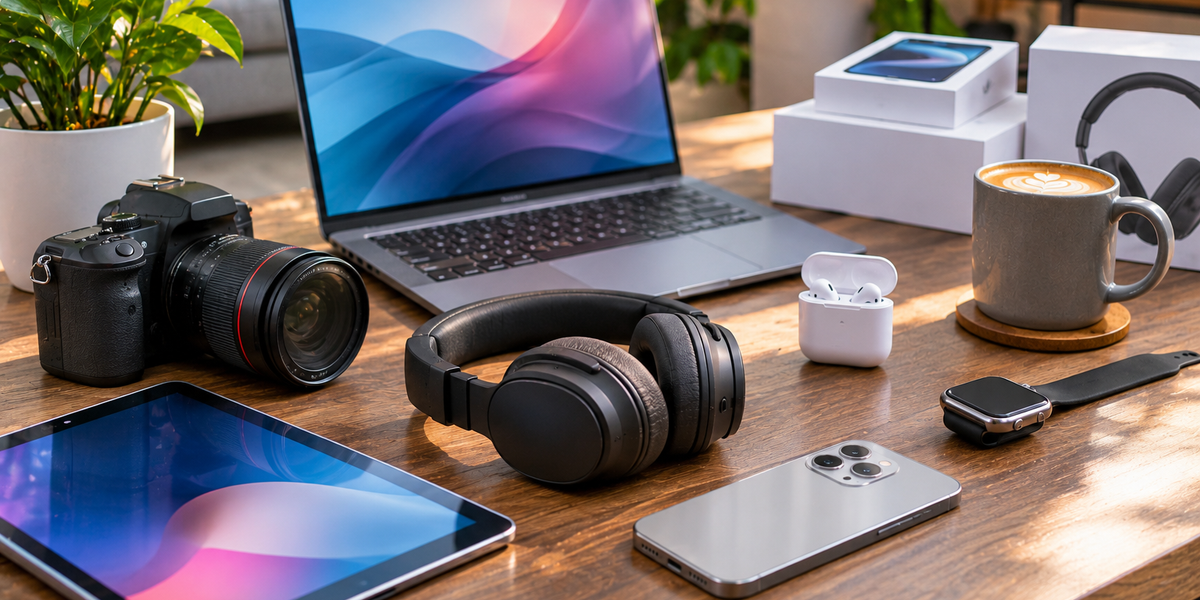
One of the cleverest things the technology industry has created isn’t a device at all, but the feeling that whatever we already own is becoming outdated. A new phone arrives with a better camera, a thinner laptop appears, headphones gain another feature, and suddenly a device that worked perfectly yesterday begins to feel inadequate. The change isn’t necessarily happening to the product; it is happening to our perception of it. Annual release cycles make technology unusually vulnerable to comparison because there is almost always a newer version available, and marketing naturally emphasizes the difference rather than everything that stayed the same. A camera improvement that matters enormously to a professional photographer may make almost no difference to someone taking family photos. A faster processor can look impressive on a specification sheet while changing very little about checking email, browsing the web, or watching videos. Yet the existence of something better can create dissatisfaction with something that remains completely functional. This is how upgrading shifts from solving problems to maintaining a feeling of being current. Instead of asking whether our device still does what we need, we start asking whether there is now something better. There almost always is, which means the chase has no natural finish line.
The Real Price Is Bigger Than the Number on the Receipt
Buying gadgets repeatedly costs more than the purchase price because every new device brings a small ecosystem of additional costs. There may be cases, chargers, adapters, subscriptions, accessories, warranties, storage plans, replacement cables, or software purchases. Then there is the time spent researching products, comparing specifications, transferring data, configuring settings, learning interfaces, selling old devices, and solving unexpected compatibility problems. Individually, these expenses can feel insignificant, but repeated across several categories of technology they become substantial. Someone who upgrades a phone, smartwatch, headphones, tablet, laptop, camera, and other electronics more frequently than necessary can spend thousands over a few years without any single purchase feeling particularly irresponsible. The psychological cost matters too. Constant comparison can turn technology from a useful set of tools into an endless shopping category. Instead of enjoying what we own, we remain slightly aware of what it lacks. The next model promises to close that gap, but shortly after buying it another product appears. The result is a strange form of technological dissatisfaction in which having more sophisticated devices doesn’t necessarily make us more satisfied with technology.
Constant Upgrading Has a Physical Cost Too
Every gadget begins long before it reaches a shop. Materials have to be extracted, components manufactured, products assembled, packaged, transported, stored, and eventually discarded or recycled. Phones, laptops, batteries, headphones, smartwatches, and other electronics contain complicated mixtures of metals, plastics, glass, chemicals, and electronic components whose production requires energy and resources. Replacing functioning devices unnecessarily therefore creates consequences that are easy to ignore because most of them happen far away from the person making the purchase. The old device may be sold or passed to someone else, which can extend its useful life, but many electronics eventually end up sitting unused in drawers or entering waste streams that are difficult to process. Repairability also matters. When batteries are difficult to replace, components are glued together, or software support ends while the hardware still works, consumers can be pushed toward replacement earlier than they otherwise would be. The most environmentally responsible gadget is often not a special “green” replacement for something you already own; it is the device already in your hand, used for another year or two. Extending the life of technology may not feel as exciting as buying something new, but reducing unnecessary replacement is one of the simplest ways to reduce the material footprint of our digital lives.
The Best Upgrade Is the One That Solves a Real Problem
None of this means upgrading technology is bad. New devices can bring meaningful improvements in safety, accessibility, performance, battery life, energy efficiency, cameras, communication, and countless other areas. Sometimes an upgrade genuinely changes what you can do. The useful distinction is between replacing something because your needs have changed and replacing it because the market has changed. If your laptop can no longer run the software required for your work, your phone battery cannot reliably last through the day, your device no longer receives important security support, or a new product offers a capability you will genuinely use, upgrading can make perfect sense. But if the old device still performs every important task and the main problem is simply knowing that something newer exists, waiting may be the better choice. A simple question can cut through much of the marketing: What will I be able to do after buying this that I cannot comfortably do now? If the answer is specific and valuable, the upgrade may be worthwhile. If the answer is mostly that the new device is newer, the excitement will probably fade long before the product stops working. Technology is supposed to improve our lives, not turn them into a permanent upgrade queue. Sometimes the smartest relationship with new technology isn’t having the latest version. It’s knowing when what you already have is enough.