The Real Reason Memes Spread So Fast

A photograph appears online.
Someone adds a caption.
Another person changes the caption.
Someone else turns it into a video. Then a reaction image. Then a joke about work. Then relationships. Then politics. Then parenting. Then something so absurd that nobody remembers what the original image was supposed to mean.
Three days later, millions of people understand the joke.
That’s the strange power of memes.
They can move through the internet faster than news articles, advertisements, carefully produced videos, and sometimes even the events they’re joking about. A meme created by one person in one country can become recognizable to people around the world within hours.
It looks random.
Usually, it isn’t.
Memes spread quickly because they combine several things the internet is exceptionally good at distributing: emotion, simplicity, imitation, identity, participation, and social connection.
A good meme doesn’t merely give you something to look at.
It gives you something to recognize, modify, and pass on.
A Meme Is More Than a Funny Picture
When people hear the word “meme,” they often imagine an image with text written across it.
But a meme can be almost anything that gets copied and transformed through culture.
It can be a photograph.
A phrase.
A dance.
A sound.
A facial expression.
A video format.
A particular editing style.
A joke structure.
A screenshot.
A way of responding to something.
The defining feature isn’t the format.
It’s replication.
A meme becomes a meme because people repeatedly reproduce, reinterpret, and distribute it.
That makes memes unusually suited to the internet, where copying information costs almost nothing.
The Word “Meme” Existed Before Social Media
The term wasn’t originally invented to describe internet jokes.
Richard Dawkins introduced the word “meme” in his 1976 book The Selfish Gene while discussing how ideas and cultural behaviors can spread from person to person.
The concept was intended as a cultural analogy to biological replication.
A melody can spread.
A phrase can spread.
A fashion can spread.
A ritual can spread.
People encounter something, remember it, imitate it, and pass it on.
Internet memes are a particularly visible version of that process.
The internet simply gave cultural replication an extraordinarily powerful distribution system.
Memes Compress an Entire Idea Into Seconds
One reason memes travel so efficiently is that they communicate quickly.
A long article might require ten minutes of attention.
A video might require two.
A meme can communicate its basic idea in two seconds.
You see the image.
Read six words.
Recognize the situation.
Understand the joke.
Done.
That efficiency matters in an environment where thousands of pieces of information compete for attention.
A meme doesn’t ask much from you.
It offers an immediate reward.
And if you understand the cultural reference behind it, the experience can be almost instantaneous.
Your Brain Loves Recognition
Many memes aren’t funny because they tell you something completely new.
They’re funny because they describe something you’ve already experienced but never articulated.
You see a meme about opening the refrigerator repeatedly even though you know nothing new has appeared.
You laugh because you’ve done it.
You see one about writing an email, rereading it seven times, and still worrying that “Thanks!” sounds aggressive.
You’ve experienced that too.
The meme turns a private, ordinary behavior into a shared experience.
The reaction isn’t simply:
“That’s funny.”
It’s:
“That’s me.”
Recognition is one of the strongest engines of meme sharing.
“That’s Me” Quickly Becomes “That’s You”
The next step is almost automatic.
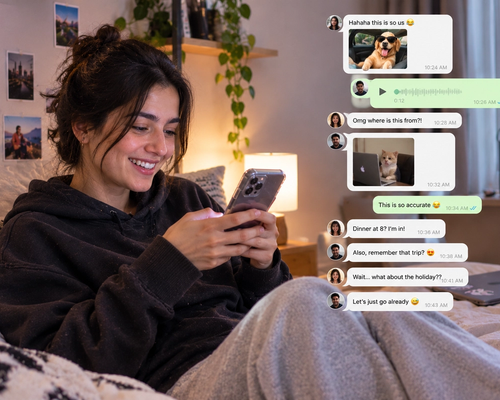
You see a meme that perfectly describes your friend.
You send it to them.
No explanation required.
The meme does the communicating for you.
Sometimes sending a meme means:
“This reminded me of you.”
Sometimes it means:
“We both do this.”
Sometimes it means:
“This is exactly what we were talking about.”
Sometimes it’s an apology, flirtation, complaint, inside joke, or emotional check-in disguised as a ridiculous photograph.
That’s why memes aren’t merely content.
They’re also a form of social communication.
Memes Are Tiny Social Gifts
Think about what happens when someone sends you a meme privately.
They encountered something among thousands of posts and thought specifically of you.
That small act reinforces a relationship.
The content might be stupid.
The social signal isn’t.
It says:
“I know your sense of humor.”
“I remember what you told me.”
“I know what annoys you.”
“I know what you like.”
“I know you’ll understand this.”
A meme can therefore function like a tiny digital gift.
It costs almost nothing to send, but it can carry surprising social meaning.
Multiply that behavior across millions of relationships and memes have an enormous distribution network.
Humor Is Extremely Shareable
Humor gives memes another advantage.
People like sharing things that create an emotional reaction.
If something makes you laugh, you often want someone else to experience the same thing.
That makes humor naturally contagious.
But memes don’t need to be funny.
They can express anger, embarrassment, sadness, nostalgia, frustration, disbelief, excitement, or affection.
The important thing is emotional compression.
A good meme can communicate an emotion faster than a paragraph.
Sometimes a reaction image says “I cannot believe you just said that” more effectively than actually typing those words.
The image carries tone automatically.
Memes Give Emotions a Visual Language
Online communication removes many of the signals available in face-to-face conversation.
You can’t always hear someone’s tone.
You can’t see their expression.
You can’t watch their body language.
Memes, GIFs, emojis, and reaction images help restore some of that missing emotional context.
Instead of writing “I’m exhausted and slightly losing my mind,” you can send an image of a fictional character staring blankly into space.
Everyone understands.
The image becomes emotional shorthand.
Once a particular image acquires a widely understood meaning, it becomes reusable across thousands of situations.
That’s one reason certain reaction memes survive for years even when other trends disappear within days.
They’re useful.
The Best Memes Are Easy to Copy
Imagine a joke that requires expensive equipment, professional editing, three actors, and six hours of production.
Most people won’t recreate it.
Now imagine a meme format that requires one photograph and a new caption.
Anyone can participate.
That difference matters.
Successful memes often have a very low barrier to entry.
You can screenshot them.
Rewrite the text.
Replace one image.
Use the same sound.
Copy the structure.
Apply it to your own job, relationship, country, hobby, school, or family.
The easier something is to reproduce, the faster it can spread.
Memes Are Templates, Not Finished Products
Traditional media is usually distributed as a finished product.
A film is released.
You watch it.
A song is recorded.
You listen to it.
A newspaper publishes an article.
You read it.
Memes work differently.
A meme often arrives as a template.
You’re expected to do something with it.
Take a familiar image and add your own situation.
Use a popular audio clip with a different video.
Repeat a recognizable joke structure but change the ending.
The audience becomes part of the production process.
This is one of the biggest differences between meme culture and traditional mass media.
People don’t merely consume the meme.
They continue making it.
Every Remix Gives the Meme Another Life
Suppose one meme format becomes popular.
Someone makes a version about university.
Someone else makes one about corporate jobs.
Another person makes one about motherhood.
Then dating.
Then gaming.
Then medicine.
Then teachers.
Then lawyers.
Then a version specific to one tiny profession that only 4,000 people understand.
Every adaptation introduces the meme to another community.
The original format becomes a shared language that can carry endless new messages.
This makes memes unusually durable when the format is flexible enough.
The surface joke changes.
The structure survives.
Memes Spread Because They’re Both Familiar and New
This is one of the cleverest things about meme formats.
A successful meme gives you something you’ve already seen and something you haven’t.
The template is familiar.
The punchline is new.
Your brain doesn’t have to decode the entire structure from the beginning.
You already understand the format.
You only need to process the variation.
It’s similar to hearing a familiar melody with new lyrics.
That balance between repetition and novelty makes memes extremely easy to consume.
Too familiar and the meme becomes boring.
Too unfamiliar and people don’t understand it.
The best memes sit somewhere in between.
Inside Jokes Create Belonging
Understanding a meme can also feel like passing a tiny cultural test.
If you understand the reference, you’re part of the group.
If you don’t, the joke may make no sense at all.
This creates social belonging.
A meme about a specific video game tells other players:
“We’ve all experienced this.”
A meme about a profession tells colleagues:
“Only people in this job understand how ridiculous this is.”
A meme about a city, generation, television show, parenting experience, or university can do the same thing.
The narrower the reference, the stronger the feeling of recognition can become.
That’s why incredibly niche memes can spread intensely inside small communities.
They don’t need everyone to understand them.
They need the right people to understand them.
Memes Help Us Signal Identity
Sharing content tells people something about us.
A meme can communicate your interests, humor, cultural references, profession, generation, frustrations, values, or personality.
You aren’t simply saying:
“This meme is funny.”
You may also be saying:
“I’m the kind of person who understands this joke.”
That’s social signaling.
Humans do it constantly offline too.
We signal identity through clothing, music, language, hobbies, books, sports, and countless other choices.
Memes simply provide another vocabulary.
Your group chat probably has a completely different meme culture from your parents’ group chat.
That’s not accidental.
Different communities build different shared languages.
Memes Can Say Things We Don’t Want to Say Directly
Sometimes humor provides emotional distance.
It’s easier to send a meme about burnout than write:
“I’m overwhelmed.”
It’s easier to joke about dating than admit you’re lonely.
It’s easier to send a meme about money than explain financial anxiety.
It’s easier to joke about work than tell your colleagues you’re frustrated.
This doesn’t mean every meme contains hidden emotional pain.
Most don’t.
But humor can make uncomfortable subjects easier to communicate.
The meme gives both people a layer of protection.
You can acknowledge something serious without requiring a serious conversation every time.
That makes memes useful for communicating experiences that might otherwise remain unspoken.
Algorithms Love Memes
Then we reach the technological accelerator.
Social media platforms are designed around engagement.
Likes.
Shares.
Comments.
Reposts.
Watch time.
Remixes.
Messages.
A successful meme can generate many of these behaviors.
People understand it quickly.
They react quickly.
They tag friends.
They send it privately.
They create their own version.
They comment with variations.
Those behaviors tell recommendation systems that people are interested.
The platform can then distribute the meme or related content to more users.
More users participate.
The cycle accelerates.
The Algorithm Creates a Feedback Loop
Imagine a meme begins with a few thousand people.
Some of them share it.
The platform detects unusually high engagement.
It recommends the content to a larger group.
Some members of that group create their own versions.
Those versions perform well too.
Now the platform has thousands of pieces of content using the same structure, sound, phrase, or visual.
People begin seeing it repeatedly.
That visibility encourages even more participation.
Eventually the meme appears everywhere.
Not because someone centrally decided it should.
Because millions of individual actions and algorithmic recommendations reinforced one another.
Memes are almost perfectly designed for this feedback loop.
Speed Creates Social Pressure to Understand the Joke
Once a meme becomes widespread, another force appears.
People don’t want to feel culturally lost.
If everyone is suddenly posting the same image and you don’t understand why, curiosity kicks in.
You search for the origin.
You read the comments.
You watch an explanation.
Now you understand it.
Then you may use it yourself.
This creates another layer of distribution.
Popularity makes people curious.
Curiosity creates understanding.
Understanding makes participation possible.
Participation increases popularity.
Internet culture can therefore become self-reinforcing.
Memes Travel Across Language Barriers
Visual humor can also cross linguistic boundaries surprisingly well.
A facial expression doesn’t necessarily require translation.
Neither does a physical reaction.
Even when text is involved, meme templates can be translated and adapted into different languages while preserving the basic joke.
A format can begin in one country and quickly develop local versions around the world.
People replace the text.
Change the cultural reference.
Adapt the situation.
The structure survives.
That makes memes unusually capable of moving through global online culture.
Smartphones Made Meme Creation Effortless
Creating visual media once required specialized equipment and software.
Now almost everyone carries a production studio in their pocket.
A smartphone can take photographs, record video, edit clips, add captions, remove backgrounds, remix audio, create GIFs, and publish the result globally within minutes.
That dramatically lowers the cost of cultural participation.
You don’t need Photoshop expertise to make a meme.
You don’t need professional video-editing software.
Often, the social platform itself provides the necessary tools.
The distance between “I have an idea” and “millions of people could potentially see this” has become incredibly small.
Memes Don’t Need to Be Polished
In fact, being too polished can sometimes hurt.
Memes often benefit from looking spontaneous.
Bad cropping can be funny.
Low-resolution images can become part of the joke.
Awkward editing can make something feel more authentic.
Misspellings can become intentional comedic devices.
This reverses the traditional media assumption that better production automatically creates better content.
A corporation might spend €100,000 producing an advertisement.
Someone posts a blurry photograph with eight words on it.
The blurry photograph gets shared ten million times.
Attention doesn’t necessarily reward production value.
It rewards resonance.
Brands Usually Arrive Late
There’s a familiar moment in the life of many memes.
First, internet communities discover the joke.
Then everyone uses it.
Then your coworker uses it.
Then media outlets explain it.
Then brands begin using it.
And suddenly something changes.
A joke that felt spontaneous begins feeling commercial.
This can accelerate the meme’s decline.
Memes depend partly on cultural ownership.
People enjoy feeling that the joke belongs to the community.
When corporations adopt the language too aggressively, the meme can start feeling manufactured.
Of course, some brands use internet culture effectively.
But the timing is difficult.
By the time a marketing department approves a meme, the internet may already have moved on.
Memes Evolve Like Cultural Mutations
One reason memes are so interesting is that nobody completely controls what they become.
Someone creates an original format.
Other people copy it imperfectly.
They modify it.
Some versions are funnier.
Some are easier to understand.
Some fit more situations.
Those versions spread more successfully.
Then people copy those versions.
Over time, the meme changes.
This resembles a kind of cultural evolution.
Variations appear.
The most shareable versions spread.
Others disappear.
The internet performs this selection process incredibly quickly because millions of people can participate simultaneously.
Sometimes the Wrong Version Wins
The version of a meme that becomes famous isn’t necessarily the original.
A remix may become more popular.
A misunderstood interpretation may replace the original meaning.
A screenshot of a screenshot can become the standard template.
The creator may disappear entirely from the story.
This happens because internet culture doesn’t preserve information perfectly.
People copy what they encounter.
They modify it.
They remove context.
They add new context.
Eventually, the cultural meaning can become completely detached from where the meme started.
That’s part of what makes tracing meme origins surprisingly difficult.
Memes Can Spread Misinformation Too
The same characteristics that make memes excellent at spreading jokes also make them capable of spreading misleading information.
They’re fast.
They’re emotional.
They’re easy to understand.
They’re easy to share.
And they often remove context.
A complicated political, scientific, historical, or social issue can be reduced to one image and one sentence.
That can be funny.
It can also be dangerously oversimplified.
People may remember the meme long after forgetting where they saw it.
And because memes often arrive through friends rather than formal news sources, we may process them differently.
The format encourages reaction before investigation.
That’s why memes are excellent cultural communication tools but poor substitutes for evidence.
Repetition Makes Memes Feel Important
There’s another psychological effect at work.
When you repeatedly encounter something, it begins to feel familiar.
And familiarity can influence how important, normal, or credible something seems.
Algorithms can intensify this because once you interact with a particular topic, you may see more related content.
Suddenly one joke, opinion, or cultural reference seems universal.
But your feed isn’t a random sample of humanity.
It’s a personalized information environment.
A meme appearing twenty times on your phone doesn’t necessarily mean everyone in the world is talking about it.
It may mean the recommendation system has learned that you keep looking at it.
Why Some Memes Last Years
Most memes disappear quickly.
Some survive.
The long-lasting ones tend to be highly reusable.
A reaction image that expresses disbelief can apply to thousands of situations.
A template with a flexible structure can be rewritten endlessly.
A meme tied to one very specific news event may disappear once the event leaves public attention.
Utility matters.
The memes that survive often become less like individual jokes and more like pieces of language.
People stop thinking about their origin.
They simply know what the image means.
At that point, the meme has become part of internet vocabulary.
Why Other Memes Die in Three Days
Overexposure kills memes quickly.
The first time you see a joke, it’s surprising.
The tenth time, it’s familiar.
The hundredth time, you may scroll past before finishing the caption.
Because algorithms can distribute successful formats so aggressively, the internet can consume months’ worth of novelty in a few days.
Creators then begin searching for something else.
The audience follows.
A meme can therefore become a victim of its own success.
The better it spreads, the faster everyone becomes tired of it.
Memes Are One of the Internet’s Native Languages
The internet inherited many forms of communication from older media.
Articles came from newspapers and magazines.
Video came from film and television.
Audio came from radio and recorded music.
But memes feel particularly native to the internet.
They’re decentralized.
They’re collaborative.
They’re remixable.
They’re fast.
They’re referential.
They change while they’re being distributed.
There doesn’t need to be one official version.
There doesn’t need to be one creator controlling the meaning.
A meme belongs partly to everyone who modifies it.
That makes it perfectly suited to a network where billions of people can simultaneously consume and create culture.
The Simple Version
Memes spread so quickly because they ask almost nothing from us while giving us several things at once.
They’re easy to understand.
They’re emotionally immediate.
They’re easy to copy.
They’re easy to personalize.
They help us communicate.
They help us signal identity.
They create inside jokes and a sense of belonging.
And social media algorithms can amplify all of those behaviors at enormous speed.
But perhaps the most important reason is simpler.
Memes don’t spread because people merely see them. They spread because people see themselves—or someone they know—inside them.
You laugh.
You think of your friend.
You press Send.
Your friend laughs.
They send it to someone else.
Someone creates a new version.
The algorithm notices.
Millions of people see it.
And suddenly an image that meant absolutely nothing three days ago has become a language everyone seems to understand.