Why the World Feels Faster Than Ever (And What to Do About It)

Everything Arrives at Once Now
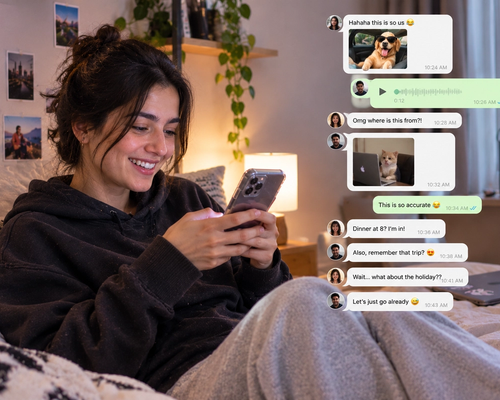
The world may not literally be moving faster, but information, expectations, and decisions reach us at a speed humans have never had to manage before. News that once arrived the following morning now reaches our phones while an event is still happening. A message sent from another continent appears instantly, and because delivery is instant, replies can begin to feel as though they should be instant too. Work follows us home through email and messaging apps, entertainment never ends because there is always another episode, video, podcast, or post, and shopping no longer requires waiting for stores to open. Even trends seem to move differently. A song, phrase, fashion style, controversy, or internet joke can appear, become unavoidable, and feel outdated within weeks. The result is a life with fewer natural pauses. Waiting used to be built into ordinary routines: waiting for photographs to be developed, letters to arrive, shops to open, television programs to begin, people to call back, or information to become available. Technology removed much of that waiting, which has brought enormous convenience, but waiting also created empty spaces in the day. Now those spaces are immediately filled. We check our phones in queues, listen to something while walking, answer messages while watching television, and consume information while eating. The strange consequence is that saving time hasn’t necessarily made us feel as though we have more of it. Instead, the space created by efficiency is often filled with another task, another piece of information, or another expectation.
Our Attention Is Trying to Keep Up With a World That Never Finishes
Part of the feeling of acceleration comes from the fact that there is no longer an obvious end to what we could be doing. Previous generations certainly experienced stress, deadlines, and information overload, but digital life has created an effectively infinite supply of unfinished possibilities. There are always unread messages, unanswered emails, articles we haven’t read, shows we haven’t watched, places we haven’t visited, skills we haven’t learned, photographs we haven’t organized, products we haven’t researched, and people whose lives we haven’t caught up with. Social media makes this even more visible because we don’t only experience our own schedule; we are constantly exposed to everybody else’s. While sitting at home, we can see someone traveling through Japan, someone launching a company, someone running a marathon, someone renovating a house, someone making elaborate breakfasts for their children, and someone apparently waking at five in the morning to meditate before doing all of the above. The mind can begin treating these separate lives as one impossible standard. At the same time, digital platforms are designed to keep presenting something new, so there is rarely a natural signal telling us that we have reached the end. You can finish a newspaper. You cannot finish the internet. When the environment has no stopping point, stopping becomes a decision we have to make ourselves, and that is surprisingly difficult.
Slowing Down Doesn’t Require Escaping Modern Life
The obvious response is to romanticize a slower past and imagine that the solution is deleting every app, abandoning technology, and moving somewhere with unreliable Wi-Fi. For most people, that is neither realistic nor necessary. A slower life isn’t necessarily a life in which everything is performed slowly; it is a life in which not everything is treated as urgent. That distinction matters. Technology can save enormous amounts of time, keep families connected across countries, make work more flexible, provide access to knowledge, and remove tedious tasks. The problem begins when the speed of the technology becomes the expected speed of the human using it. An email arriving instantly doesn’t mean it requires an instant response. A message being visible doesn’t mean someone is entitled to immediate attention. A trend appearing everywhere doesn’t mean we need to participate in it. A new product existing doesn’t mean the one we own has become obsolete. Creating boundaries around speed can be surprisingly practical: turning off unnecessary notifications, keeping parts of the day free from work messages, doing one activity without simultaneously consuming content, walking somewhere without headphones occasionally, finishing a book without checking a phone every few pages, or allowing a message to wait while we finish a conversation with the person physically beside us. These actions are small, but they return something important: the ability to decide where our attention goes instead of allowing every incoming signal to decide for us.
A Slower Life Is Really About Choosing What Deserves Your Time
The deeper solution isn’t learning how to fit even more into the day. It may be accepting that a meaningful life will always contain things we don’t get around to doing. We won’t read every good book, visit every beautiful place, follow every important story, maintain every possible friendship, watch every recommended series, master every useful skill, or take advantage of every opportunity. Trying to keep up with everything is what makes life feel permanently behind. Slowing down therefore requires choosing, and choosing means deliberately allowing some things to pass without us. That can feel uncomfortable in a culture built around updates, optimization, productivity, and fear of missing out, but it is also where a sense of time begins returning. A long dinner doesn’t need to accomplish anything. A walk doesn’t need to become exercise data. A hobby doesn’t need to become a side business. A holiday doesn’t need to produce content. An afternoon with your family doesn’t need to be optimized. Some experiences become valuable precisely because we stop asking them to justify the time they take. The world will probably continue becoming faster, and technology will continue making information, products, entertainment, and people more immediately accessible. We may not be able to slow that system down, but we can refuse to let its speed become the speed of every part of our lives. The goal isn’t to move slowly through everything. It is to move quickly when speed serves us, slowly when something deserves our attention, and deliberately enough to know the difference.