Why Every Trend Now Lasts Two Weeks Instead of Two Years
There was a time when a trend had room to breathe.
A particular style of jeans could dominate fashion for years. A hairstyle could define an era. A song could slowly become popular, stay everywhere for months, and eventually become associated with a specific period of your life. Interior design moved in recognizable waves. Slang lasted long enough for people outside the internet to actually learn what it meant.
Now something can feel culturally unavoidable on Monday and slightly embarrassing by the following Friday.
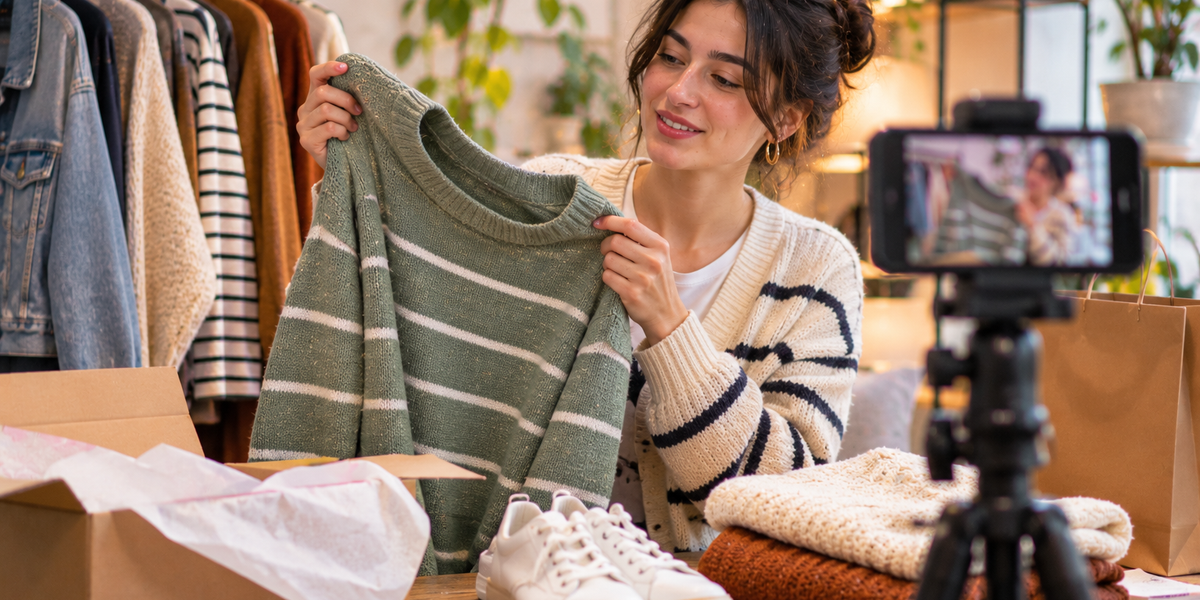
A particular aesthetic suddenly fills your feed. Everyone is wearing the same shoes, making the same breakfast, decorating their homes with the same color, using the same phrase, buying the same bag, filming the same type of video, and explaining that this is apparently who we all are now.
Then, almost immediately, it’s over.
The next aesthetic arrives.
The next product becomes essential.
The next phrase replaces the previous phrase.
The next “era” begins before the last one has even finished.
Trends haven’t disappeared. If anything, we’re surrounded by more of them than ever.
What has changed is their speed.
The modern trend cycle has been compressed by social media algorithms, global platforms, influencer culture, fast production, online shopping, and an internet economy that benefits enormously from making yesterday feel old.
The result is a culture in which trends can now be created, distributed, copied, commercialized, exhausted, mocked, and replaced in a matter of weeks.
Trends Used to Travel Much More Slowly
Before social media, cultural trends had physical limitations.
A fashion trend might begin on a runway, appear in magazines months later, reach celebrities, move into major retailers, and eventually spread into everyday wardrobes.
Music traveled through radio, television, record stores, clubs, magazines, and word of mouth.
Interior trends appeared in design publications and slowly filtered into furniture stores and ordinary homes.
Even slang needed time to move between communities.
Culture spread through relatively limited channels, and those channels had schedules.
Magazines were published monthly.
Television programs aired at specific times.
Fashion collections arrived seasonally.
Albums had release cycles.
Retailers planned inventory months in advance.
The infrastructure itself forced trends to move slowly.
Today, the infrastructure does the opposite.
It rewards speed.
Social Media Removed the Distribution Delay
Imagine someone in Copenhagen discovers an interesting way to style a scarf.
Twenty years ago, perhaps a few friends would notice.
Maybe a fashion photographer would eventually capture something similar.
Perhaps months later the look would appear in a magazine.
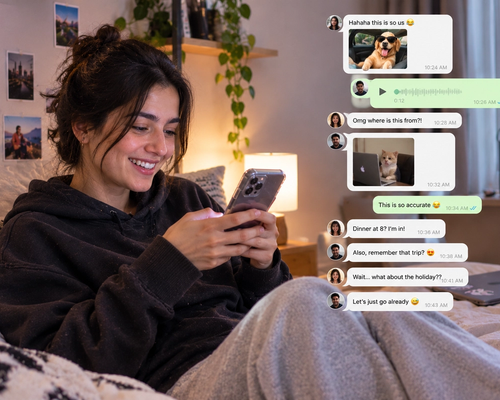
Today, that person can upload a video in the morning.
By the afternoon, it has millions of views.
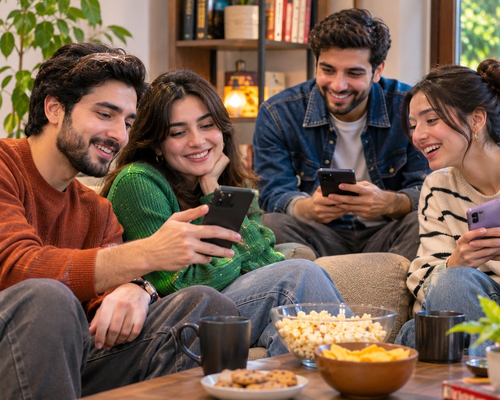
By the evening, creators in London, New York, Seoul, Sydney, and Paris are making their own versions.
Within days, retailers are promoting products that fit the look.
Within a week, trend accounts are explaining how to participate.
Within two weeks, someone posts:
“Is anyone else already tired of this?”
The geographic distance between trend creation and trend adoption has almost disappeared.
Culture can now spread globally at the speed of a notification.
Algorithms Don’t Just Show Trends. They Accelerate Them.
Social media feeds aren’t neutral chronological windows into what everyone is doing.
They’re recommendation systems.
Platforms try to predict what will keep people watching, scrolling, clicking, commenting, sharing, and returning.
When a particular sound, format, aesthetic, product, or topic begins performing well, recommendation systems can show similar content to enormous numbers of people.
That creates a feedback loop.
People see something becoming popular.
They recreate it because popular formats are more likely to receive attention.
Those recreations generate more examples.
The platform detects even more engagement.
It distributes the trend further.
More people participate.
Suddenly something that began in a relatively small corner of the internet appears to be everywhere.
The algorithm didn’t necessarily invent the trend.
But it gave the trend an accelerator.
Everyone Can Participate Immediately
Older cultural trends often had gatekeepers.
You might need to be a designer, musician, journalist, retailer, celebrity, photographer, or editor to influence what reached a large audience.
Social media dramatically lowered that barrier.
Anyone can participate in a trend immediately.
You don’t need permission from a magazine editor to demonstrate a new outfit.
You don’t need a record label to create a viral sound.
You don’t need a television producer to popularize a joke.
You don’t need a retailer to tell people which products are fashionable.
This democratization has created extraordinary creativity.
It has also created enormous duplication.
Once a format works, thousands of people can reproduce it almost instantly.
And that creates one of the biggest reasons trends die so quickly.
We see too much of them.
Trends Now Die From Overexposure
Imagine hearing your favorite song once every few days.
You might love it for months.
Now imagine hearing it 40 times tomorrow.
By Friday, you may never want to hear it again.
The same thing happens with trends.
A style doesn’t necessarily become boring because it existed for too long.
It becomes boring because we experience it too many times in too short a period.
If your feed shows you the same aesthetic repeatedly, your brain can experience months’ worth of cultural exposure in a week.
The calendar says the trend is new.
Psychologically, it already feels old.
This is one of the strange consequences of algorithmic feeds.
They compress cultural time.
The Internet Turns Discovery Into Saturation Almost Instantly
There used to be a meaningful period between discovering something and seeing it everywhere.
That period has almost vanished.
You discover a new restaurant.
Three days later, every local creator has filmed it.
You discover a clothing brand.
A week later, your feed contains fifteen sponsored posts for it.
You hear an interesting song.
Within days, you’ve heard the same fifteen-second section hundreds of times behind unrelated videos.
You discover a phrase you find funny.
Two weeks later, brands are using it in advertisements.
The internet is extraordinarily efficient at taking something interesting and removing the feeling that you discovered it yourself.
That matters because part of the appeal of trends is novelty.
Once novelty disappears, the trend begins losing its cultural power.
We Don’t Just Follow Trends Anymore. We Watch Them Being Born.
Social media has made us unusually conscious of trend formation.
We don’t simply start seeing a particular style more frequently.
We see videos announcing:
“This is about to be everywhere.”
“Calling the next big trend.”
“Things that are going to be huge this summer.”
“What’s in and what’s out.”
“The aesthetic replacing last year’s aesthetic.”
We’re watching culture while simultaneously analyzing culture.
That self-awareness speeds everything up.
Once people begin describing something as a trend, it can become one even faster.
But the label also starts the countdown.
The moment everyone recognizes something as a trend, people begin searching for whatever comes next.
Trend Forecasting Became Entertainment
Trend forecasting once existed largely as a professional industry.
Fashion companies, retailers, designers, marketers, and cultural researchers tried to predict what consumers might want months or years ahead.
Now everyone is a trend forecaster.
Entire social media accounts are dedicated to predicting what will become fashionable next.
Creators announce the next colors, shoes, hairstyles, foods, destinations, lifestyles, and aesthetics.
Prediction itself becomes content.
And there is an obvious incentive to keep predicting.
You can’t build a content business around saying:
“Everything is basically the same as last month.”
You need something new.
The next thing.
The thing that’s replacing the previous thing.
That creates a culture obsessed not merely with trends, but with trend turnover.
The Word “Aesthetic” Changed Everything
The internet has become extraordinarily good at packaging entire identities into recognizable visual categories.
Instead of simply liking a certain dress, room, book, or hairstyle, you can belong to an aesthetic.
Minimalist.
Coastal.
Old money.
Clean girl.
Cottagecore.
Dark academia.
Mob wife.
Quiet luxury.
Tomato girl.
And dozens more that appear, mutate, overlap, and disappear.
The labels make trends easier to communicate.
Instead of explaining an entire visual language, someone can give it a name.
Once something has a name, people can search for it.
Platforms can categorize it.
Creators can produce tutorials about it.
Retailers can sell products around it.
Media outlets can write about it.
And people can announce its death.
Naming a trend makes it easier to spread.
It also makes it easier to replace.
We Started Treating Personal Style Like Software Updates
One of the strangest effects of rapid trend culture is the idea that our identities should constantly update.
Suddenly your wardrobe can be “outdated.”
Your kitchen can look “so 2024.”
Your makeup routine needs an update.
Your hairstyle belongs to a previous era.
Your living room apparently reveals that you missed three aesthetic cycles.
But human taste doesn’t naturally change this quickly.
Most people don’t genuinely wake up every six weeks with completely different preferences.
The pressure to change often comes from somewhere else.
We’re repeatedly shown something new and told that the previous version is finished.
Personal taste becomes confused with cultural compliance.
Instead of asking, “Do I like this?” we start asking, “Is this still in?”
Those are very different questions.
Fast Fashion Learned to Move at Internet Speed
Traditional fashion operated largely around seasons.
Designers created collections.
Retailers ordered products.
Manufacturing took time.
Stores received inventory.
Consumers bought what was available.
Fast-fashion businesses dramatically accelerated that process.
The internet accelerated it again.
When a particular style begins trending online, retailers have enormous financial incentives to respond quickly.
Products inspired by popular aesthetics can appear online while the trend is still gaining momentum.
That creates a powerful loop between social media and consumption.
You see the trend.
You can immediately buy the trend.
You post yourself participating in the trend.
Someone else sees your post.
They buy it too.
Then everyone owns it.
Then everyone is bored with it.
Then the next trend arrives.
Online Shopping Removed the Waiting Period
Before e-commerce, wanting something and obtaining it were separate experiences.
You might see a product in a magazine.
You had to find a store that sold it.
You had to physically go there.
It might be unavailable.
You might reconsider the purchase.
Today, desire and purchase can be separated by approximately fifteen seconds.
You see something.
Tap the product tag.
Choose your size.
Pay.
Done.
That convenience is incredible.
But it also means trends can translate into consumption much faster.
The faster people buy into a trend, the faster the trend reaches saturation.
And once everyone has something, the cultural machine starts searching for the next object that will feel new.
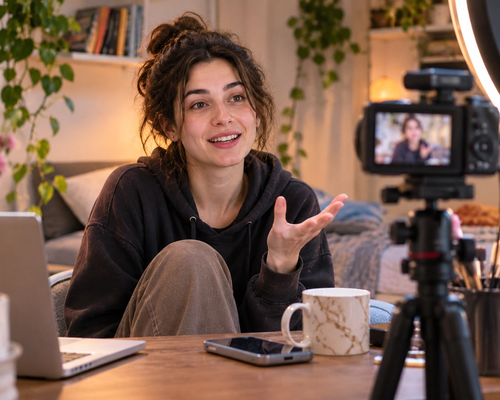
Influencers Need Something New to Talk About
Creators face a structural problem.
Their job requires content.
If you post about fashion, beauty, technology, food, interiors, travel, or lifestyle, you need new subjects constantly.
You can’t review the same handbag every week.
So the creator economy naturally rewards novelty.
New products.
New aesthetics.
New routines.
New destinations.
New hacks.
New “must-haves.”
New things we’re supposedly no longer doing.
This doesn’t require influencers to secretly manipulate everyone.
It’s simply the economics of attention.
Newness creates content.
Content creates views.
Views create revenue.
A culture built around continuous content production will naturally produce continuous cultural turnover.
Brands Have the Same Incentive
If you already own enough clothes, shoes, cosmetics, furniture, electronics, and accessories, companies face a problem.
They need a reason for you to buy again.
One solution is genuine innovation.
Another is making the thing you already own feel culturally outdated.
Fashion has always worked partly this way.
But social media makes the process faster and more measurable.
Brands can see trends developing in real time.
They can watch search behavior.
They can track engagement.
They can collaborate with creators.
They can launch targeted advertisements immediately.
They can test dozens of products and quickly promote whichever ones attract attention.
Consumer culture no longer needs to wait for next season.
It can refresh your desires every time you open your phone.
Microtrends Replaced Megatrends
One major shift is that culture has fragmented.
In the past, a smaller number of media channels meant enormous numbers of people often consumed the same television programs, magazines, music, advertisements, and celebrity culture.
That helped create large, long-lasting mainstream trends.
Today, people inhabit different algorithmic worlds.
Your feed might be dominated by running, Scandinavian interiors, skincare, books, and parenting.
Someone else’s contains gaming, streetwear, watches, cryptocurrency, and bodybuilding.
Both of you can spend hours online and barely encounter the same culture.
Instead of a handful of enormous trends lasting years, we increasingly get thousands of microtrends circulating through different communities.
They’re smaller.
They’re faster.
And they’re easier to replace.
A Trend Can Feel Huge Without Actually Being Huge
This creates another illusion.
Your algorithm learns what interests you.
If you interact with a particular trend, the platform may show you more of it.
You see ten videos.
Then twenty.
Then fifty.
Soon it feels as though the entire world is talking about it.
But perhaps a relatively small group is talking about it repeatedly.
Algorithmic personalization can make niche trends feel universal.
This matters because perceived popularity creates actual popularity.
If you think everyone is wearing a particular shoe, you’re more likely to consider buying it.
The algorithm can therefore create a strange cultural hall of mirrors.
You see something because you’re interested in it.
You assume it’s everywhere because you keep seeing it.
Then you participate because you believe it’s everywhere.
Your participation gives the algorithm another signal.
The trend grows.
Irony Kills Trends Faster Too
The internet doesn’t merely spread trends.
It mocks them.
Almost immediately after something becomes popular, another group begins making jokes about it.
Then come the parody videos.
Then the “things we’re leaving behind” posts.
Then the backlash.
Then the backlash to the backlash.
Then someone announces that actually the original thing is cool again.
This entire cycle can happen before traditional media would once have finished writing the first article about the trend.
Internet culture is highly self-referential.
We’re simultaneously participating in trends and making fun of ourselves for participating in them.
That irony accelerates cultural exhaustion.
Being Early Became Social Currency
There is status in discovering something before everyone else.
You found the musician before they became famous.
You wore the brand before it became mainstream.
You visited the destination before everyone started going.
You knew the restaurant before reservations became impossible.
Social media intensified this form of status because discovery is now visible.
You can demonstrate that you were early.
But being early only matters if someone else is late.
So once a trend becomes mainstream, early adopters need somewhere else to go.
The very people who helped popularize something may become the first to abandon it.
The cycle begins again.
The Algorithm Rewards Novelty
Our attention responds strongly to change.
If you’ve seen the same type of video twenty times, the twenty-first version may not capture your attention.
Platforms therefore benefit from continuously finding things that feel slightly different.
Creators learn the same lesson.
A familiar format with a new twist performs better than endless repetition.
This creates evolutionary pressure inside online culture.
Trends mutate rapidly.
One aesthetic becomes another aesthetic.
One format produces ten variations.
One joke becomes increasingly absurd versions of itself.
One fashion trend splits into several subtrends.
Culture begins behaving almost like software receiving constant updates.
AI May Make Trend Cycles Even Faster
Generative AI adds another acceleration layer.
Ideas, images, advertisements, product concepts, videos, music, copy, and visual variations can increasingly be produced at enormous speed.
That reduces the cost of experimentation.
Instead of designing five concepts and choosing one, creators and companies can generate dozens or hundreds of variations.
That doesn’t guarantee good culture.
But it dramatically increases the volume of material competing for attention.
When cultural production becomes faster, the pressure on cultural consumption increases too.
There is always something else arriving.
Something newer.
Something stranger.
Something optimized for the next scroll.
The bottleneck is no longer producing enough content.
It’s finding enough human attention to consume it.
This Is Why Everything Feels Weirdly Dated So Quickly
Look at a social media video from only a few years ago.
Sometimes it already feels unmistakably old.
The editing style is different.
The music is different.
The captions are different.
The slang is different.
The camera movements are different.
Even the way people speak to the camera has changed.
Digital culture evolves so quickly that tiny stylistic details become timestamps.
Previous generations often identified decades through fashion and music.
We’re beginning to identify individual years—and sometimes individual months—through internet aesthetics.
That’s an extraordinary acceleration of cultural time.
The Trend Cycle Now Contains Its Own Funeral
Modern trends often follow a recognizable pattern.
First, something appears in a small community.
Then influential creators discover it.
Then algorithms amplify it.
Then everyone begins copying it.
Brands commercialize it.
Media outlets explain it.
People become exhausted by it.
Creators begin mocking it.
Someone declares it dead.
Then, eventually, nostalgia brings some version of it back.
What once took years can now happen in months or weeks.
The stages didn’t disappear.
They simply became compressed.
The Environmental Cost Is Real
Rapid trend cycles aren’t only culturally exhausting.
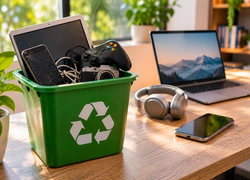
They can also encourage physical waste.
When online trends revolve around clothing, beauty products, home décor, electronics, or accessories, constantly changing tastes can encourage people to replace perfectly functional things.
The problem isn’t participating in trends.
Humans have always enjoyed novelty, fashion, and cultural experimentation.
The problem appears when temporary online relevance becomes a reason to treat physical objects as temporary too.
A video trend can disappear tomorrow.
The polyester dress purchased for it doesn’t.
The phone case doesn’t.
The furniture doesn’t.
The gadget doesn’t.
Digital culture moves much faster than physical waste disappears.
Trends Aren’t Necessarily Bad
It’s easy to become overly cynical about all of this.
Trends can be fun.
They create shared references.
They introduce people to music, food, fashion, books, hobbies, places, and ideas they might never have discovered otherwise.
They allow communities to form quickly.
They give people ways to experiment with identity.
And social media has allowed trends to emerge from communities that traditional cultural gatekeepers historically ignored.
The problem isn’t that trends exist.
The problem is when we mistake visibility for value.
Something being everywhere doesn’t mean it’s good.
Something disappearing from your feed doesn’t mean it became bad.
You Don’t Have to Retire Something Because TikTok Did
One of the healthiest responses to accelerated trend culture is surprisingly simple.
Keep liking things after they’re no longer trending.
Wear the jeans.
Keep the furniture.
Listen to the song.
Use the bag.
Paint your kitchen the color you genuinely like.
Make the recipe after everyone has stopped posting it.
Personal taste becomes much more interesting when it isn’t constantly synchronized with an algorithm.
There’s also something quietly liberating about realizing that the internet cannot actually declare your belongings obsolete.
A creator can announce that something is “out.”
Nothing physically happens.
Your jacket doesn’t change.
Your sofa doesn’t deteriorate.
Your shoes don’t become less comfortable.
Only the story surrounding them changed.
Personal Style Is the Opposite of Trend Chasing
Personal style develops slowly.
You try things.
Some work.
Some don’t.
You notice which colors you repeatedly choose.
Which silhouettes make you comfortable.
Which objects you keep for years.
Which rooms make you feel calm.
Which music you return to.
Which books remain with you.
Over time, those choices become yours.
Trend culture encourages the opposite process.
It asks you to repeatedly replace your preferences with whatever is currently receiving attention.
But the people who seem to have the strongest personal style often aren’t the people following every trend.
They’re the people who know which trends to ignore.
The Best Question Isn’t “Is This Trending?”
When you encounter the next thing everyone suddenly seems to want, ask yourself something different.
Would I like this if I hadn’t seen it fifty times this week?
Would I still wear it next year?
Would I buy it if nobody could see me wearing it?
Would I decorate my home this way if I couldn’t post a photograph?
Would I listen to this song if it weren’t attached to a viral video?
Would I still want this object if the algorithm stopped showing it tomorrow?
You don’t have to reject trends.
You just want to know whether the desire belongs to you or to the feed.
Sometimes the answer will genuinely be both.
That’s fine too.
The Real Reason Trends Feel So Short
Trends didn’t suddenly lose their ability to last.
The environment around them changed.
Social media eliminated distribution delays.
Algorithms can amplify emerging behavior almost instantly.
Creators reproduce successful formats at enormous scale.
Online shopping converts attention into purchases immediately.
Brands respond to cultural signals faster.
Trend forecasters constantly search for the next thing.
And personalized feeds expose us to the same ideas so frequently that we become tired of them faster.
What used to take years can now happen in weeks.
A trend can be discovered, copied, commercialized, saturated, mocked, and abandoned before most people outside the internet even realize it existed.
The Simple Version
Every trend now seems to last two weeks instead of two years because the internet compressed the entire cultural cycle.
We discover things faster.
We copy them faster.
We buy them faster.
We see them more often.
We become bored with them faster.
And then an algorithm immediately presents something new.
The strange result is that we have access to more culture than any previous generation while sometimes giving ourselves less time to actually enjoy any of it.
Maybe the most rebellious response isn’t refusing to participate in trends.
It’s refusing to obey their expiration dates.
If you genuinely like something, keep it.
The internet will move on in two weeks anyway.