The Inventions That Changed How We Live

The inventions that change human life most profoundly aren’t always the ones that look the most futuristic.
Some are almost invisible today.
Clean water arrives when you turn a tap. Electricity appears when you flip a switch. Food remains cold inside a refrigerator. A photograph travels across the world in seconds. An elevator carries you to the twentieth floor without anyone considering the extraordinary amount of engineering involved.
Once an invention becomes ordinary, we stop noticing it.
Yet much of modern life is built on technologies that fundamentally changed where humans could live, how long they could survive, how quickly they could travel, what they could know, and who they could communicate with.
The most important inventions didn’t simply give us new objects.
They reorganized everyday life.
The Wheel Changed More Than Transportation
The wheel is such an obvious invention that it’s easy to underestimate.
Humans can carry things.
Wheels allow humans to move much heavier things much more efficiently.
Once wheels could be combined with carts, wagons, and eventually increasingly sophisticated vehicles, the amount of material that could move across land changed dramatically.
That affected trade, agriculture, construction, warfare, migration, and communication.
The wheel also became fundamental to machinery. Gears, pulleys, mills, mechanical clocks, turbines, engines, and countless industrial systems depend on rotational motion.
So the wheel wasn’t simply an early version of the car tire.
It became one of the fundamental mechanical ideas behind civilization.
Writing Allowed Knowledge to Outlive People
Before writing, knowledge depended heavily on memory.
Stories, laws, instructions, histories, and traditions could be passed from one person to another, but information changed as it traveled.
Writing transformed that relationship.
A thought could leave someone’s mind and remain available after they were gone.
Governments could keep records.
Merchants could document transactions.
Laws could be written down.
Scientific observations could accumulate.
People separated by distance and time could communicate.
This was revolutionary because human knowledge no longer needed to begin again with every generation.
Civilization could build memory outside the human brain.
Paper Made Information Portable
Writing becomes much more powerful when the material used to record it is relatively cheap, light, and portable.
Paper helped make that possible.
Information could be copied, transported, stored, and eventually produced at enormous scale.
Books became easier to create.
Records became easier to maintain.
Education could expand.
Ideas could travel.
The significance of paper becomes clearer when you imagine modern society without cheap surfaces for recording information.
Contracts, books, letters, maps, newspapers, schoolwork, government records, packaging, and countless other parts of everyday life depended on it.
Digital technology has reduced our dependence on paper, but it hasn’t reduced the importance of what paper enabled.
The Printing Press Made Ideas Scalable
Writing allowed knowledge to survive.
The printing press allowed it to spread.
Before mechanical printing, reproducing books could require enormous amounts of manual labor. Copies were expensive, which limited access.
Printing changed the economics of information.
A text could be reproduced repeatedly and distributed to much larger audiences.
Books became more accessible.
Literacy expanded.
Scientific findings could circulate.
Political and religious arguments could spread beyond local communities.
News could reach larger populations.
The revolutionary part wasn’t simply the machine.
It was replication.
Once ideas could be copied cheaply, knowledge could move through society much faster.
In a sense, the printing press was one of humanity’s earliest information-scaling technologies.
The Compass Expanded the Navigable World
Humans navigated long before magnetic compasses.
Sailors used coastlines, stars, winds, currents, and accumulated knowledge.
But reliable directional information made long-distance navigation more practical, particularly when familiar landmarks weren’t visible.
That helped expand maritime exploration and trade.
The consequences were enormous and complicated.
Long-distance navigation connected distant economies and cultures, but it also enabled conquest, colonization, forced migration, resource extraction, and disease transmission on extraordinary scales.
This is an important reminder about transformative inventions.
Technology doesn’t determine whether its consequences will be good.
It increases what humans are capable of doing.
Humans decide what to do with that capability.
The Mechanical Clock Changed Our Relationship With Time
Humans have always understood time.
But mechanical clocks changed how precisely societies could organize around it.
Instead of structuring life primarily around sunrise, sunset, seasons, meals, or religious routines, increasingly precise clocks allowed time to become standardized.
Work could begin at a specific hour.
Trains could run on schedules.
Factories could coordinate shifts.
Meetings could happen at agreed times.
Global commerce could synchronize.
Eventually, minutes and seconds became part of ordinary daily planning.
Today, we’re so accustomed to precise time that being six minutes late can feel significant.
For most of human history, that degree of precision would have been meaningless.
The clock didn’t merely measure time.
It changed how society organized it.
The Steam Engine Changed the Meaning of Power
For most of history, useful physical power came primarily from humans, animals, wind, and water.
The steam engine changed that equation.
Machines could generate substantial mechanical power without depending directly on muscle, flowing rivers, or favorable winds.
That transformed mining, manufacturing, and transportation.
Factories could operate at larger scales.
Railways could move people and goods over land much faster.
Steamships changed maritime transportation.
Industrial production accelerated.
The steam engine became one of the central technologies of the Industrial Revolution.
But industrialization also brought dangerous working conditions, pollution, urban overcrowding, and profound social disruption.
Again, technological progress rarely arrives without trade-offs.
The Railway Shrunk Countries
Before railways, long-distance land travel was slow and expensive.
Rail changed the scale of movement.
People could travel between cities much faster.
Food could reach markets before spoiling.
Raw materials could move to factories.
Manufactured goods could reach distant customers.
Mail could travel faster.
Towns developed around railway connections.
Even timekeeping changed because railway schedules required places to coordinate their clocks more consistently.
Distance didn’t physically shrink.
But the amount of time required to cross it did.
Every major transportation revolution since has repeated that pattern.
Electricity Rebuilt Everyday Life
Few technologies have transformed daily life as completely as electricity.
Electricity existed in nature long before humans understood how to generate and distribute it reliably. Once electrical systems developed, however, they created an entirely new technological foundation.
Lighting changed homes and cities.
Factories could operate differently.
Electric motors powered machines.
Communication systems expanded.
Eventually electricity powered refrigerators, washing machines, televisions, computers, medical equipment, elevators, air conditioning, phones, and almost every other category of modern technology.
Electricity is so fundamental that many inventions we treat as separate technologies are really applications of electrical power.
Take electricity away from a modern city and almost everything begins failing.
That’s how foundational it became.
Electric Light Changed the Night
Artificial lighting existed long before electric bulbs.
Humans used fires, candles, and oil lamps for thousands of years.
But electric lighting made illumination safer, brighter, more reliable, and easier to distribute at scale.
That changed the rhythm of daily life.
Factories could operate after sunset.
Shops could remain open.
Streets became easier to navigate at night.
People could read, work, and socialize indoors without depending on flames.
The practical day expanded.
Today we complain about having too much artificial light and staring at screens late into the night.
But historically, the ability to make darkness optional was extraordinary.
Sanitation Changed Cities More Than Many Famous Machines
Some of the most important inventions are underground.
Modern sewer systems, toilets, drainage, and clean-water infrastructure don’t receive the cultural attention given to cars, airplanes, or smartphones.
Their impact on human life is enormous.
Dense cities create a basic biological problem.
Thousands or millions of people produce waste while requiring safe drinking water.
If waste contaminates water supplies, disease can spread rapidly.
Modern sanitation systems helped separate drinking water from human waste and made large urban populations substantially safer.
The flush toilet itself matters.
But the pipes, sewers, treatment facilities, pumps, and public infrastructure behind it matter even more.
Civilization depends on plumbing far more than civilization likes discussing plumbing.
Clean Water May Be One of the Greatest Technologies Ever Created
Turning on a tap and receiving safe water feels almost too ordinary to count as technology.
It isn’t.
Modern drinking-water systems involve collection, treatment, filtration, disinfection, pumping, testing, storage, and enormous distribution networks.
The result is something previous generations could never take for granted.
Safe water dramatically reduces exposure to diseases transmitted through contaminated supplies.
It also changes domestic labor.
People don’t need to spend the same amount of time collecting water manually when reliable infrastructure brings it directly into the home.
Sometimes technological progress looks like a spacecraft.
Sometimes it looks like a tap.
Vaccination Changed the Odds of Survival
For most of human history, infectious diseases were an unavoidable part of life.
Vaccination changed humanity’s relationship with many of them by training the immune system to recognize particular threats before a dangerous infection occurs.
The impact has been profound.
Smallpox, once responsible for enormous suffering and death, was eradicated globally through vaccination.
Other diseases have been dramatically reduced where vaccination programs are widespread.
Vaccines represent an unusual kind of invention because their success can become invisible.
When prevention works, nothing happens.
A person doesn’t become seriously ill.
An outbreak doesn’t occur.
A disease disappears from ordinary experience.
The absence of disaster is difficult to notice, but it can be one of technology’s greatest achievements.
Antibiotics Changed What an Infection Meant
Before effective antibiotics, bacterial infections that are now routinely treatable could become life-threatening.
A small wound could become dangerous.
Pneumonia could kill.
Surgery carried enormous infection risks.
Childbirth could become deadly because of bacterial infection.
Antibiotics transformed medicine by giving doctors powerful tools against bacterial disease.
They also made many other medical advances safer.
Complex surgery, cancer treatment, organ transplantation, and intensive care all depend partly on the ability to manage bacterial infections.
Their success created a new challenge: overuse and misuse contribute to antimicrobial resistance.
An invention can solve one enormous problem while requiring future generations to manage the consequences of its success.
Refrigeration Changed What We Eat
The refrigerator doesn’t feel revolutionary because it sits quietly in the kitchen.
But reliable refrigeration transformed food.
Meat, dairy, vegetables, leftovers, and other perishable products could be stored safely for longer periods.
Food could travel greater distances.
Households didn’t need to purchase or prepare every perishable item immediately before eating it.
Supply chains changed.
Supermarkets changed.
Restaurants changed.
Medicine changed too because some medicines and vaccines require controlled temperatures.
Refrigeration effectively gave humans more control over one of nature’s basic processes: decay.
That’s a remarkable achievement hiding behind the milk.
The Washing Machine Changed Domestic Labor
Some inventions transform society by saving minutes.
Others save thousands of hours across a lifetime.
Washing clothes manually is physically demanding and time-consuming. For much of history, that labor fell disproportionately on women.
Mechanical washing machines dramatically reduced the amount of time required for routine laundry.
The same is true of dishwashers, vacuum cleaners, electric irons, and other household appliances.
These inventions may look less historically impressive than rockets or computers, but technological importance shouldn’t be measured by drama.
A machine that repeatedly removes hours of unpaid labor from ordinary life can have enormous social consequences.
The Telephone Destroyed the Relationship Between Distance and Conversation
For most of human history, communicating with someone far away required sending something.
A messenger.
A letter.
A telegram.
Information moved physically.
The telephone changed that.
People separated by enormous distances could speak in real time.
That transformed business, family relationships, emergency services, government, journalism, and everyday social life.
Eventually, mobile phones removed the requirement that the person be standing near a particular telephone.
Then smartphones added text, video, photographs, maps, email, and the internet.
But the fundamental revolution began earlier.
Human voice became transmissible across distance.
Radio Created a Shared Live Audience
Radio made it possible for one speaker to reach enormous numbers of people simultaneously.
News could be broadcast.
Music could enter homes.
Political speeches could reach entire populations.
Sports could be experienced live by people nowhere near the stadium.
Entertainment became mass communication.
This was different from printing because everyone could receive the same information at roughly the same moment.
A shared media culture became possible on an unprecedented scale.
Television would expand that idea dramatically.
Television Put the World in the Living Room
Television combined sound with moving images and turned mass communication into an intensely visual experience.
Wars, elections, sporting events, entertainment, advertisements, disasters, celebrity culture, and major historical events could enter people’s homes.
Television didn’t merely provide entertainment.
It helped create national and international shared experiences.
Millions of people could watch the same event and discuss it the next day.
Today’s media environment is far more fragmented, but television established many of the habits that streaming and online video inherited.
The Automobile Reorganized Cities
The car didn’t simply make travel faster.
It changed geography.
People could live farther from work.
Suburbs expanded.
Road networks grew.
Petrol stations, parking structures, motels, drive-through restaurants, shopping centers, and entire industries developed around automobile travel.
Cities were redesigned.
Tourism changed.
Dating changed.
Shopping changed.
Emergency services changed.
The automobile increased personal mobility enormously.
It also created pollution, traffic congestion, road deaths, and infrastructure designed around vehicles rather than pedestrians.
Few inventions demonstrate the complexity of technological change better.
Once society reorganizes itself around an invention, living without it becomes much harder.
The Airplane Made the Planet Smaller
Human beings spent most of history moving at approximately the speed of walking, horses, boats, or eventually trains.
Aircraft changed the scale again.
Journeys that once required weeks or months could be completed in hours.
Families could live on different continents and still visit one another.
Tourism became international.
Business became more global.
Perishable goods could travel enormous distances.
Emergency supplies could move rapidly.
Air travel also changed our mental map of the world.
A country thousands of kilometers away stopped feeling impossibly distant.
The physical distance remained.
The psychological distance shrank.
The Shipping Container Quietly Built Globalization
The standardized shipping container may be one of the least glamorous inventions responsible for the modern world.
Before containerization, loading and unloading cargo could be slow, labor-intensive, and expensive.
Standard containers allowed goods to move efficiently between ships, trains, and trucks.
The same box could travel through multiple transportation systems without its contents being individually unloaded at every stage.
That dramatically reduced shipping costs and helped enable modern global supply chains.
The phone in your pocket, clothes in your wardrobe, furniture in your home, and countless products around you may have crossed oceans inside standardized metal boxes.
Globalization depends on software and finance.
It also depends on rectangles of steel.
The Elevator Created the Modern Skyline
Without elevators, extremely tall buildings become impractical for ordinary use.
Few people want to walk up forty floors every morning.
Safe passenger elevators changed architecture by making vertical movement easy.
That allowed cities to build upward rather than only outward.
Land in dense urban centers could support far more people and businesses.
The skyscraper therefore isn’t simply an achievement in structural engineering.
It’s also an achievement in transportation.
The elevator is essentially a tiny public transport system running vertically through a building.
The Camera Changed Memory
Before photography, preserving someone’s appearance required drawing, painting, or description.
Photography changed that relationship.
Ordinary people could preserve faces, places, events, and moments with extraordinary detail.
Over time, cameras became smaller, cheaper, faster, and eventually digital.
Then smartphones placed a camera in billions of pockets.
The result is historically unusual.
An ordinary family today may create more photographs in a year than previous generations produced across several lifetimes.
Photography changed memory from something primarily internal into something increasingly external and searchable.
The Computer Changed What Work Could Be
Computers began as specialized machines and gradually became general-purpose tools capable of transforming almost every industry.
They calculate.
Store information.
Edit images.
Control machinery.
Run financial systems.
Model weather.
Manage inventories.
Design buildings.
Analyze scientific data.
Create music.
Power communication networks.
A computer’s extraordinary importance comes partly from its flexibility.
A refrigerator refrigerates.
A car transports.
A computer can become thousands of different tools depending on the software running on it.
That makes computing less like one invention and more like a foundation on which other inventions can be built.
The Microchip Put Computers Everywhere
Early computers were enormous.
The development of integrated circuits and increasingly powerful microprocessors allowed computing power to become smaller, cheaper, and more efficient.
Computers moved from specialized facilities to offices.
Then homes.
Then pockets.
And eventually almost everywhere.
Cars contain computers.
Washing machines contain computers.
Medical devices contain computers.
Televisions contain computers.
Cameras contain computers.
Factories contain thousands of them.
Modern society isn’t simply using computers.
It is saturated with them.
The Internet Connected the World’s Computers
The computer allowed information to be processed digitally.
The internet allowed computers to exchange that information across enormous distances.
That combination transformed almost everything.
Email changed correspondence.
Websites changed publishing.
Search engines changed information retrieval.
E-commerce changed shopping.
Streaming changed entertainment.
Online banking changed finance.
Remote work changed offices.
Social media changed relationships and public communication.
Cloud computing changed software.
The internet’s power comes partly from connecting technologies that previously existed separately.
The computer became dramatically more valuable once it could communicate with other computers.
Search Engines Changed Our Relationship With Knowledge
The internet created an enormous information problem.
Once billions of pages existed, how would anyone find anything?
Search engines became the navigation layer.
Instead of remembering exactly where information lived, people could describe what they wanted and receive possible answers.
This changed everyday behavior in subtle ways.
We stopped memorizing certain information because we knew we could retrieve it.
We became accustomed to solving unfamiliar problems immediately.
How do I fix this?
What does this word mean?
Where is this restaurant?
What happened in 1848?
Search turned enormous parts of human knowledge into something that felt instantly accessible.
GPS Changed What It Means to Be Lost
Getting lost used to be a normal part of traveling somewhere unfamiliar.
You carried maps.
Asked strangers.
Memorized landmarks.
Printed directions.
Missed turns.
GPS and digital mapping transformed navigation.
A phone can estimate your location, calculate a route, monitor traffic, reroute you after a mistake, find nearby businesses, and estimate exactly when you’ll arrive.
That changed driving, walking, shipping, aviation, emergency services, agriculture, logistics, and countless other industries.
It also changed human behavior.
We don’t need to know where we are in the same way previous generations did.
Our devices know for us.
The Smartphone Combined Dozens of Inventions
The smartphone is remarkable partly because it isn’t one invention.
It’s a convergence of many.
Telephone.
Camera.
Computer.
GPS receiver.
Music player.
Flashlight.
Calculator.
Clock.
Calendar.
Map.
Notebook.
Television.
Wallet.
Scanner.
Voice recorder.
Internet terminal.
All of these technologies were compressed into a device small enough to fit in a pocket.
That convergence changed everyday behavior more rapidly than almost any recent technology.
We can communicate, navigate, photograph, work, shop, bank, learn, date, read, and entertain ourselves through the same object.
The smartphone didn’t merely give us another device.
It absorbed many previous devices.
The Smartphone Also Changed Attention
Every transformative technology has consequences beyond its intended function.
The smartphone gave us extraordinary access to information and communication.
It also made that access constant.
Work can reach us anywhere.
News can reach us anywhere.
Entertainment can reach us anywhere.
Advertisements can reach us anywhere.
Social comparison can reach us anywhere.
Boredom became easier to eliminate.
So did solitude.
The smartphone’s biggest effect may not ultimately be what it allows us to do.
It may be how rarely we are now completely disconnected from everything else.
Artificial Intelligence May Be Another Foundational Shift
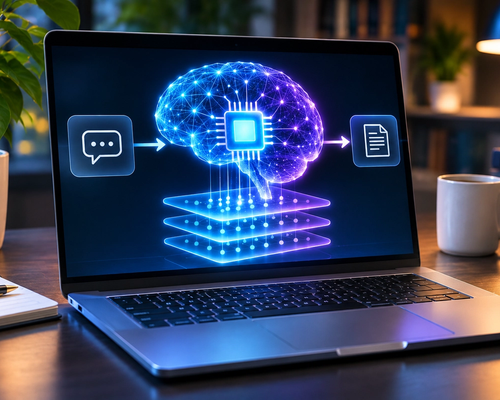
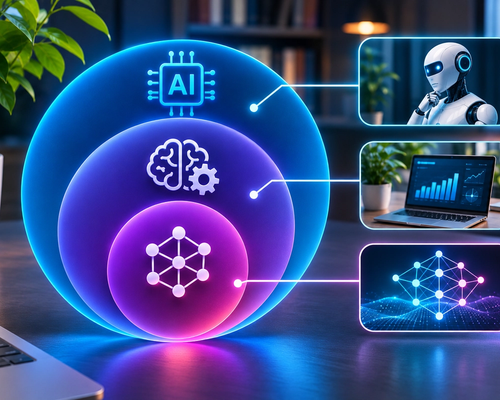
Artificial intelligence isn’t one single invention either. It describes a broad collection of technologies that allow computers to perform tasks involving pattern recognition, prediction, language, perception, generation, and decision support.
Modern generative AI has made those capabilities much more visible to ordinary users.
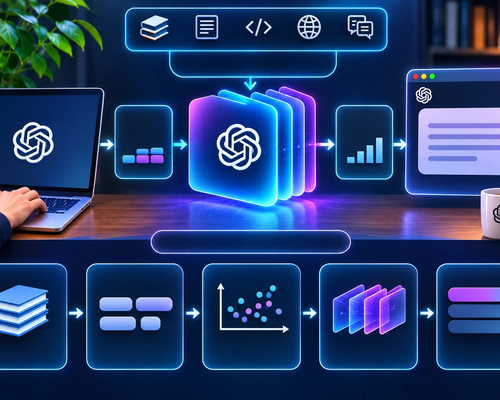
Software can generate text, images, code, audio, and other material from natural-language instructions.
The potentially transformative part isn’t simply that computers can produce content.
It’s that interacting with computers may increasingly require less knowledge of how computers themselves work.
Instead of learning exactly which menu, command, formula, or programming language to use, people can increasingly describe the outcome they want.
If that continues, natural language may become one of the most important interfaces in computing.
We are still early enough that the long-term consequences remain uncertain.
But historically, technologies that make powerful tools easier for ordinary people to use tend to matter.
The Greatest Inventions Often Become Invisible
There’s a pattern across all these technologies.
The more successfully an invention becomes integrated into everyday life, the less we notice it.
Nobody wakes up amazed by sewage systems.
We don’t celebrate the refrigerator every morning.
We don’t stare at electrical outlets in disbelief.
We rarely think about standardized shipping containers while buying imported products.
We only notice infrastructure when it stops working.
The power goes out.
The water stops.
The internet fails.
The elevator breaks.
The GPS loses signal.
Suddenly, the invisible technology becomes extremely visible.
That’s often the clearest sign of how important an invention really is.
The Best Inventions Don’t Just Save Time
We often evaluate technology by convenience.
Does it make something faster?
Cheaper?
Easier?
But the most important inventions do something bigger.
They change what is possible.
Writing allowed knowledge to survive its creators.
Printing allowed ideas to scale.
Sanitation allowed dense cities to become safer.
Vaccination prevented diseases rather than merely treating them.
Electricity created an entirely new technological foundation.
Telecommunications separated communication from physical distance.
Computers automated information processing.
The internet connected information globally.
The smartphone made digital infrastructure portable.
These inventions didn’t simply improve existing behavior.
They created new categories of behavior.
Technology Changes Society, and Society Changes Technology
It’s tempting to tell the history of invention as a sequence of brilliant people creating objects that transformed the world.
Reality is messier.
Most technologies develop gradually.
Multiple inventors contribute.
Scientific discoveries combine with engineering improvements.
Governments build infrastructure.
Businesses commercialize products.
Consumers find unexpected uses.
Regulations shape adoption.
Cultures adapt.
Then the technology changes in response.
The car changed cities.
Cities then built roads for cars.
Smartphones changed communication.
Companies then designed services assuming everyone had smartphones.
The internet changed shopping.
Retailers then reorganized themselves around e-commerce.
Technology shapes society.
Society then reorganizes itself around technology.
Progress Doesn’t Automatically Mean Improvement
An invention can be extraordinary without every consequence being positive.
Cars created mobility and pollution.
Industrialization created wealth and dangerous labor conditions.
Social media connected people and created new forms of manipulation and comparison.
Plastics enabled lifesaving medical products and enormous environmental waste.
Artificial intelligence can increase productivity while creating new questions about employment, misinformation, authorship, and power.
The lesson isn’t that technology is bad.
It’s that technology is powerful.
Once an invention changes what humans can do, society still has to decide what humans should do with that capability.
The Simple Version
The inventions that changed how we live aren’t necessarily the flashiest ones.
Some changed movement, like the wheel, railway, automobile, airplane, and elevator. Some changed knowledge, like writing, paper, printing, computers, search engines, and the internet. Some changed survival, like sanitation, clean water, vaccination, antibiotics, and refrigeration. Others changed communication, like the telephone, radio, television, and smartphone.
The most important inventions share one characteristic: they don’t remain separate from ordinary life.
They disappear into it.
We stop saying, “I’m using an incredible technological system that provides treated drinking water directly to my home.”
We turn on the tap.
We don’t say, “I’m accessing a global network of interconnected computers.”
We open a browser.
We don’t say, “I’m using satellites and atomic clocks to calculate my position on Earth.”
We ask our phone where the restaurant is.
That may be the final stage of every truly transformative invention.
First it seems impossible.
Then it seems revolutionary.
Then it becomes expensive.
Then it becomes common.
And eventually, it becomes so ordinary that we forget someone had to invent it at all.