The Ideas That Sounded Crazy and Turned Out Right
The Future Often Sounds Ridiculous Before It Becomes Normal
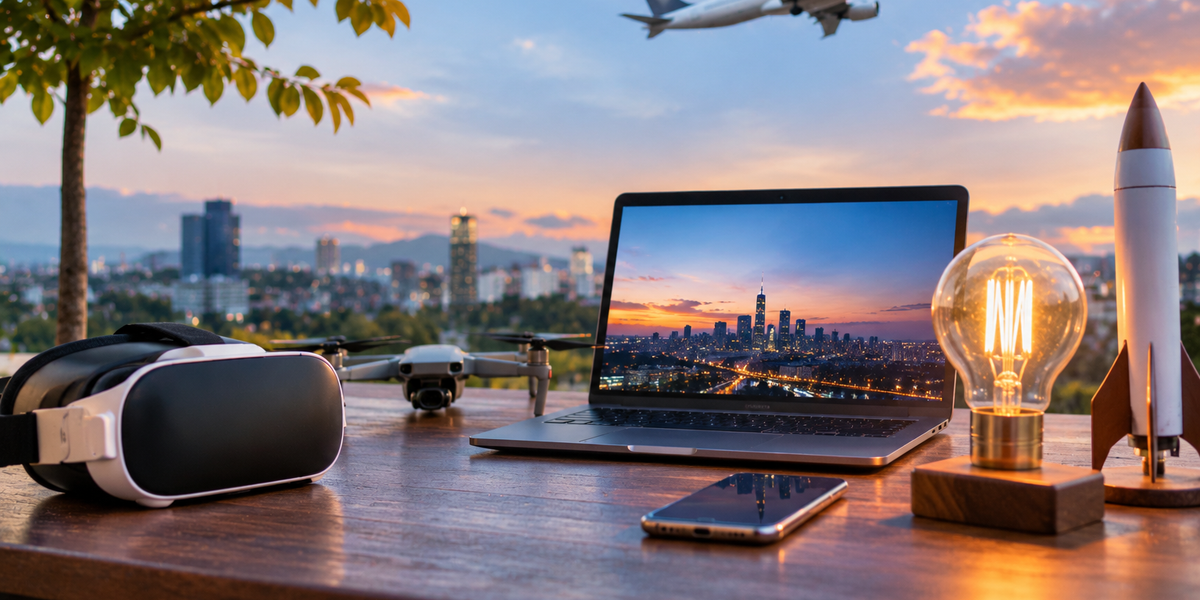
Some of the ideas that now define ordinary life would have sounded absurd when they were first proposed. Humans flying through the air in machines heavier than air, speaking instantly to someone thousands of kilometers away, carrying a computer in a pocket, watching live events from another continent, paying for something without physical money, or building reusable rockets that return to Earth all required people to imagine possibilities that contradicted what most people had previously experienced. The difficulty with genuinely new ideas is that we initially evaluate them using the world that already exists. Early automobiles looked impractical in a society designed around horses. Personal computers seemed unnecessary when computers were enormous machines used primarily by governments, universities, and corporations. Online shopping sounded risky when people were accustomed to inspecting products in stores and paying a cashier. Video calling belonged to science fiction before networks, cameras, processors, and software became good enough to make it ordinary. The people who believed in these ideas weren’t necessarily better at predicting the future; often, they simply understood that current limitations weren’t permanent. An idea can sound impossible because the technology genuinely isn’t ready yet, while still being fundamentally correct about where technology is heading.
Many “Crazy” Ideas Were Actually Waiting for Other Technologies to Catch Up
A surprising number of inventions failed or struggled in their earliest forms not because the underlying idea was wrong, but because the surrounding world wasn’t ready. Electric vehicles existed long before their modern resurgence, but batteries, charging infrastructure, manufacturing economics, and consumer expectations needed to improve. Video streaming was imaginable before it became practical, but slow internet connections made the experience frustrating. Smartphones required decades of progress in semiconductors, touchscreens, batteries, wireless networks, digital cameras, GPS, software, and miniaturization before all of those technologies could comfortably fit inside one device. Cloud computing depended on fast networks, enormous data centers, virtualization, reliable infrastructure, and businesses becoming comfortable with storing important information outside their own buildings. Even remote work, which once seemed unrealistic for many office jobs, became increasingly practical because video calls, messaging platforms, shared documents, cloud applications, laptops, and home broadband had quietly matured in the background. This is why timing matters almost as much as the idea itself. A concept can fail spectacularly in one decade and succeed enormously in another without its central premise changing very much. Sometimes the visionary isn’t the person who imagines something nobody else can imagine; it’s the person who recognizes that several previously separate technologies are finally becoming good enough to make an old dream practical.
The Most Powerful Ideas Often Challenge Something Everyone Else Accepts
Ideas can also sound crazy because they question systems people have stopped questioning. Why should software have to be purchased in a box and installed from a disc? Why should you need to stand on a street and hope an empty taxi passes? Why should television programs determine when you watch them? Why should travelers stay only in buildings officially designated as hotels? Why should a rocket costing enormous amounts of money automatically be thrown away after one flight? Why should a small business need complicated technical infrastructure just to sell something online? Once an industry has operated in a particular way for decades, its limitations can begin to look like natural laws rather than design choices. The innovators who change industries often separate the two. They ask whether something is genuinely impossible or simply inconvenient because nobody has rebuilt the system yet. Streaming challenged scheduled television. Digital photography challenged the assumption that photographs required film. GPS navigation reduced our dependence on paper maps. Smartphones absorbed cameras, calculators, music players, maps, flashlights, recorders, and many other separate devices. Reusable rockets challenged assumptions about launch economics. Artificial intelligence is now challenging the assumption that using sophisticated software always requires learning exactly how the software works. In retrospect, successful ideas can look obvious. Before success, however, they often look unnecessary, unrealistic, expensive, or even foolish because they require people to imagine behavior that doesn’t yet exist.
Being Called Crazy Doesn’t Mean an Idea Is Brilliant
There is an important catch to all of this: most ideas that sound crazy do not secretly contain the future. Some ideas sound impossible because they really are impossible. Others solve problems nobody cares about, depend on unrealistic economics, misunderstand human behavior, arrive without the infrastructure they require, or simply aren’t better than what already exists. History creates a powerful selection bias because we remember the strange ideas that succeeded and forget thousands of equally strange ideas that disappeared. The useful lesson, therefore, isn’t to believe every unconventional idea or assume skepticism proves someone is a visionary. It’s to examine why the idea sounds unreasonable. Does it violate a genuine physical limitation, or merely challenge an assumption? Does it require technology that is improving quickly? Would falling costs suddenly make it practical? Does it remove a frustration people already experience? Are several supporting technologies beginning to converge? Those questions help distinguish fantasy from an idea that may simply be early. Many of the technologies surrounding us today passed through a stage where they looked unnecessary or unrealistic before becoming ordinary enough that we barely notice them. That’s one of the strangest things about innovation: when a truly radical idea finally succeeds, society often forgets how radical it once seemed. Yesterday’s impossible idea becomes tomorrow’s breakthrough, and eventually it becomes something so normal that we complain when it takes three seconds too long.